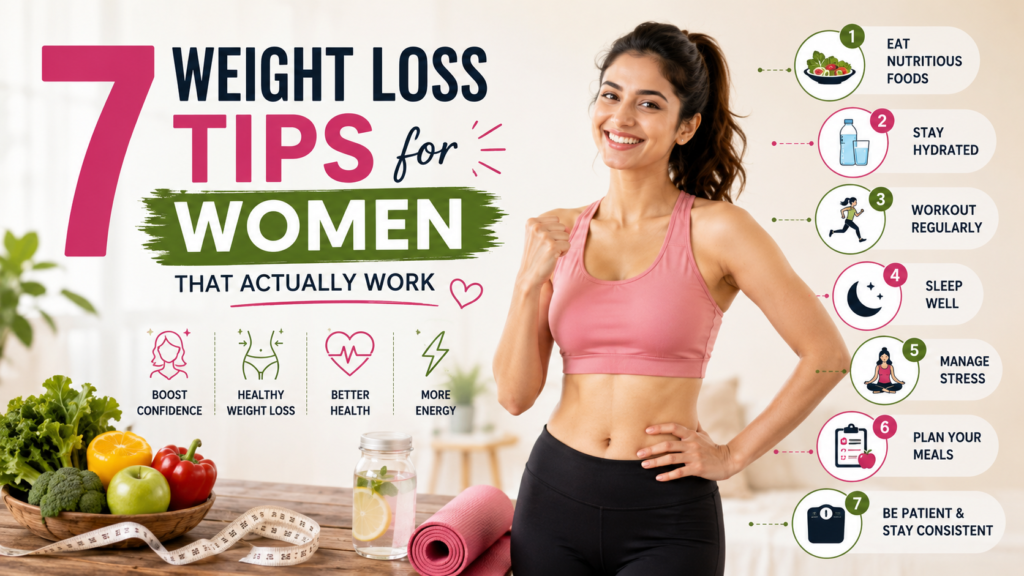
If you have tried to lose weight and felt like the advice never quite fit your body, you are not imagining it. The best weight loss tips for women take into account hormones, muscle mass, stress, sleep, and the different stages of life. A plan built for a 25-year-old man will not work the same way for you.
The good news is that you do not need a crash diet or a punishing workout routine. This guide walks you through seven practical, science-backed habits, plus common mistakes to avoid and a simple one-day meal plan you can copy today.
Why Weight Loss Is Different for Women
Women tend to carry more body fat than men and less muscle, which means they burn fewer calories at rest. Hormones also play a big role. Estrogen, progesterone, thyroid hormones, and cortisol all influence appetite, energy, and where your body stores fat.
A few things make the journey unique:
- Monthly cycles. Water retention and cravings often rise in the week before your period, so the scale can jump even when you are doing everything right.
- Life stages. Pregnancy, postpartum, perimenopause, and menopause all change how your body handles weight.
- Health conditions. Conditions such as PCOS and thyroid disorders can make weight loss slower and more frustrating.
None of this means you cannot lose weight. It means you should be patient with yourself and focus on habits instead of quick fixes.
1. Create a Safe Calorie Deficit
Weight loss comes down to eating slightly fewer calories than your body uses. This is called a calorie deficit, and it is the foundation of every approach that works, whether you count calories or not.
For most women, a calorie deficit of about 300 to 500 calories per day is a sensible starting point. That pace typically leads to roughly 0.5 to 1 pound of weight loss per week, which is steady and realistic.
A few guidelines:
- Most women should not eat below 1,200 calories per day without medical supervision.
- Very low-calorie diets can slow your metabolism, drain your energy, and often end in rebound weight gain.
- If you are active, pregnant, breastfeeding, or have a medical condition, talk to your doctor before cutting calories.
A simple way to start is to track what you eat for one week without changing anything. Most people are surprised by how much comes from drinks, sauces, snacks, and oils. Small swaps, such as water instead of soda or one fewer handful of snacks, add up quickly.
2. Eat Enough Protein in Every Meal
Protein is one of the most helpful tools for weight loss. It keeps you full longer, protects your muscle while you lose fat, and takes more energy to digest than carbs or fat.
Many women under-eat protein, especially at breakfast. A good general target for protein intake for women who are trying to lose weight is about 0.7 to 1 gram per pound of your goal body weight, spread across the day. Your doctor or a registered dietitian can help you find the right number for your situation.
Easy ways to add protein:
- Breakfast: Greek yogurt, eggs, cottage cheese, or a protein smoothie
- Lunch: Chicken, tuna, tofu, beans, or lentils over a salad or grain bowl
- Dinner: Salmon, lean beef, turkey, tempeh, or chickpeas with vegetables
- Snacks: String cheese, edamame, roasted chickpeas, or a hard-boiled egg
Aim for about 30 to 40 grams of protein per meal. You will likely notice fewer cravings and less afternoon snacking within a week or two.
3. Add Strength Training, Not Just Cardio
Cardio burns calories while you do it, but strength training changes your body over time. Building muscle raises the number of calories you burn at rest and gives your body a firmer, more toned shape.
Many women avoid weights because they worry about getting bulky. In reality, building large muscles takes years of dedicated training and specific nutrition. For most women, strength training simply leads to a leaner, stronger, more energetic body.
A beginner-friendly plan:
- Strength train 2 to 3 days per week for 30 to 45 minutes.
- Focus on big movements: squats, lunges, deadlifts, push-ups, rows, and overhead presses.
- Start with a weight that feels challenging by the last two reps, then increase gradually.
- Add 2 to 3 cardio sessions per week, or simply walk 7,000 to 10,000 steps a day.
No gym? Resistance bands, dumbbells, and bodyweight exercises at home work just as well when you stay consistent.
Strength training also supports your bones, which matters more as women age and estrogen levels drop.
4. Choose Whole Foods Over Processed Foods
Highly processed foods are easy to overeat. They are designed to taste great, digest quickly, and leave you hungry again soon. Whole foods, on the other hand, are filling, nutrient-rich, and usually lower in calories for the same portion size.
Build most of your meals around:
- Vegetables and fruits
- Lean proteins and fish
- Beans, lentils, and legumes
- Whole grains such as oats, brown rice, and quinoa
- Nuts, seeds, olive oil, and avocado in sensible portions
You do not have to give up your favorite treats. A helpful rule is the 80/20 approach: eat nourishing whole foods about 80 percent of the time and leave room for flexibility the rest of the time. This is far easier to maintain than strict rules, and it lowers the odds of a binge after a period of heavy restriction.
If you want to lose belly fat naturally, keep in mind that you cannot target fat loss in one area. Belly fat comes down as overall body fat comes down, and the combination of a calorie deficit, protein, strength training, good sleep, and lower stress is what works best.
5. Improve Sleep and Manage Stress
Sleep and stress quietly shape your results more than most people realize. When you are short on sleep, your body makes more ghrelin (the hunger hormone) and less leptin (the fullness hormone). That is why you crave sugary, salty foods after a bad night.
Chronic stress raises cortisol, which can increase appetite and make you more likely to reach for comfort food.
Try these habits:
- Aim for 7 to 9 hours of sleep each night.
- Keep a consistent bedtime and wake time, even on weekends.
- Put screens away 30 to 60 minutes before bed.
- Take a 10-minute walk, stretch, or practice deep breathing when stress builds.
- Make time for things you enjoy, like friends, hobbies, or time outdoors.
These steps may not feel like weight loss tips, but they make every other habit easier to stick with.
6. Drink Enough Water and Eat More Fiber
It is easy to mistake thirst for hunger. Drinking water throughout the day helps with appetite control and energy. A glass of water before meals can also help you feel fuller. A common goal is about 8 cups a day, though your needs may be higher if you are active or live in a hot climate.
Fiber is just as important. It slows digestion, steadies blood sugar, and keeps you satisfied. Most women get far less than the recommended 25 grams per day.
Good fiber sources include:
- Beans, lentils, and chickpeas
- Berries, apples, and pears
- Oats, chia seeds, and flaxseed
- Broccoli, leafy greens, and carrots
- Whole grain bread and brown rice
Increase fiber slowly and drink plenty of water, or you may experience bloating.
7. Weight Loss Tips for Women Over 30, Over 40, and With PCOS
Your body changes with age and health conditions, so the same plan may need small adjustments.
Weight Loss Tips for Women Over 30
In your 30s, muscle mass begins to decline slowly if you do not train. Busy schedules, less sleep, and more stress also tend to creep in. Prioritize strength training, protein, and consistent sleep to protect your metabolism.
Weight Loss Tips for Women Over 40
During perimenopause, shifting hormones can lead to more belly fat, poorer sleep, and a slower metabolism. Lifting weights, getting enough protein, and managing stress become even more important. Be patient, because progress may be slower than it was in your 20s, but it is absolutely possible.
Menopause Weight Loss
After menopause, lower estrogen levels make it easier to gain weight around the midsection and lose muscle and bone density. Strength training, calcium and vitamin D intake, a high-protein diet, and good sleep all help. Talk to your doctor about whether other support, including hormone therapy, makes sense for you.
PCOS Weight Loss
Polycystic ovary syndrome (PCOS) often involves insulin resistance, which can make losing weight harder. Helpful strategies include choosing lower-glycemic carbs such as beans, oats, and vegetables, pairing carbs with protein, lifting weights, and prioritizing sleep. Even a modest weight loss of 5 percent can improve cycles and symptoms for many women. Work with your healthcare provider to build a plan that fits your needs.
Common Mistakes Women Should Avoid
Even motivated women can get stuck. Watch out for these common pitfalls:
- Crash dieting. Extreme restriction leads to muscle loss, fatigue, and rebound weight gain.
- Skipping meals. This often backfires with overeating later in the day.
- Relying only on cardio. Without strength training, you may lose muscle along with fat.
- Cutting out entire food groups. This is hard to sustain and may leave you short on nutrients.
- Weighing yourself too often. Daily fluctuations are normal. Look at weekly or monthly trends instead.
- Ignoring non-scale progress. Better energy, looser clothes, and improved strength all count.
- Doing it alone. Support from a friend, a coach, or a community makes a real difference.
If you hit a weight loss plateau, which is very common, do not panic. First, re-check your portions and tracking. Then try adding a bit more movement, increasing your protein, improving sleep, or adjusting your weights. Sometimes the best move is a short maintenance break before continuing.
A Simple 1-Day Sample Meal Plan
Here is an example of a balanced day of eating at about 1,550 calories without the evening treat, or 1,650 with it. Adjust portions to fit your own needs. If you are looking for more ideas on healthy meal plans for weight loss or the best diet plan for weight loss for female readers who enjoy flavorful, home-style food, this Indian meal diet plan for weight loss includes both vegetarian and non-vegetarian menus with calorie counts.
Breakfast (about 350 calories) Greek yogurt with berries, a tablespoon of chia seeds, and a small handful of almonds.
Mid-morning snack (about 150 calories) An apple with one tablespoon of peanut butter.
Lunch (about 450 calories) Grilled chicken or chickpea salad with mixed greens, cucumber, tomatoes, quinoa, and olive oil lemon dressing.
Afternoon snack (about 150 calories) Hummus with carrot and bell pepper sticks.
Dinner (about 450 calories) Baked salmon or tofu with roasted broccoli and sweet potato.
Optional evening treat (about 100 calories) A square or two of dark chocolate or a small bowl of fruit.
This day provides plenty of protein, fiber, and healthy fats, and it leaves room for enjoying your food.
FAQs
How can a woman lose weight fast and safely?
There is no truly fast and safe method, but you can move steadily. Aim for a modest calorie deficit, eat enough protein, strength train, and sleep well. Most women can safely lose about 0.5 to 1 pound per week.
What is the best diet plan for weight loss for a female?
The best plan is one you can follow consistently. Diets built around whole foods, lean protein, vegetables, fiber, and reasonable portions work well for most women, whether you follow a Mediterranean, vegetarian, or traditional cultural style of eating.
How do I lose belly fat naturally?
You cannot spot-reduce fat, but you can lower overall body fat. Focus on a calorie deficit, protein, strength training, daily walking, better sleep, and stress management.
Is intermittent fasting good for women?
Intermittent fasting for women works for some people, mainly because it helps them eat fewer calories. However, long fasts can disrupt cycles, sleep, and energy for some women. If you try it, start gently, such as a 12-hour overnight fast, and stop if you feel unwell. Check with your doctor first if you have a health condition or are pregnant or breastfeeding.
Why am I not losing weight even though I am eating less?
Common reasons include underestimated portions, too little protein, poor sleep, high stress, water retention, or hormonal changes. A plateau can also happen simply because your body needs time to adjust. If it lasts more than a few weeks, review your habits or speak with a healthcare professional.
How much exercise do women need to lose weight?
A good target is about 150 minutes of moderate activity per week plus two or more days of strength training. Daily walking also helps a lot.
Conclusion
The most effective weight loss tips for women are not complicated or extreme. Build a modest calorie deficit, eat protein at every meal, lift weights, favor whole foods, protect your sleep, manage stress, and drink water. Then adjust for your age, hormones, and health needs.
Progress will not be perfectly linear, and that is normal. Focus on small habits you can repeat every day, and give your body time to respond. The results you build slowly are the ones that last.
Explore more health and wellness guides on HealthSpots.
Disclaimer: This article is for general information only and is not medical advice. Always talk to your doctor or a registered dietitian before starting a new diet or exercise program, especially if you are pregnant, breastfeeding, managing a medical condition such as PCOS or thyroid disease, or taking medication.