
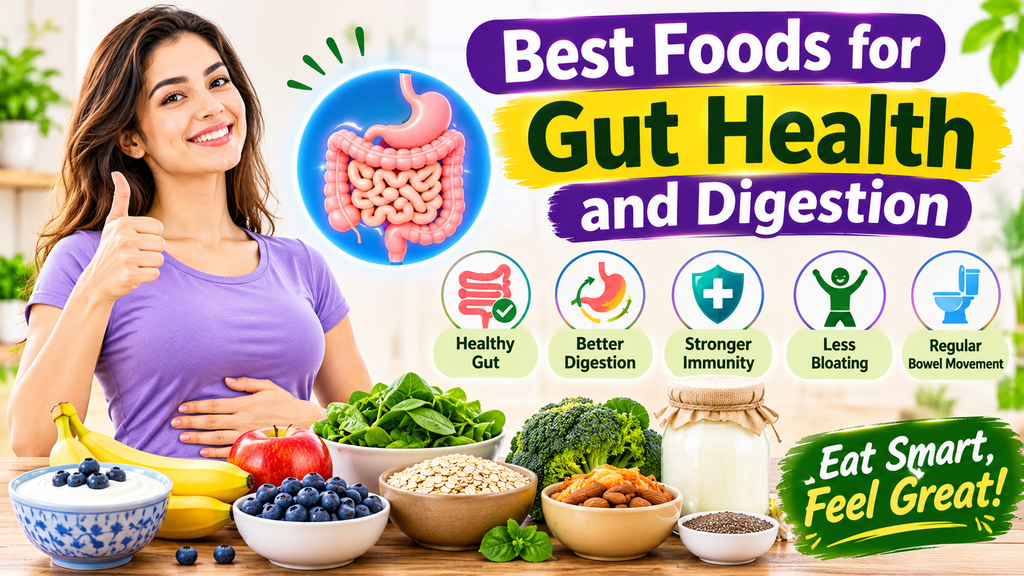
Quick Answer: The best foods for gut health and digestion are fermented foods such as yogurt and kefir, prebiotic foods such as garlic, onions, and bananas, and high-fiber foods such as beans, oats, and vegetables. Eat a wide variety of plants every day, drink enough water, and add new foods gradually.
Table of Contents
- What Is Gut Health, and Why Does It Matter?
- Best Foods for Gut Health and Digestion: The Full List
- Fermented Foods: Live Cultures That Support Digestion
- Prebiotic Foods: Feeding the Good Bacteria
- High-Fiber Foods: The Foundation of Gut Health
- The 30 Plants a Week Idea
- A Simple Gut-Friendly Day of Eating
- Best Choices vs. Foods That Upset Digestion
- Frequently Asked Questions
- Final Verdict
If you are looking for the best foods for gut health and digestion, you are asking a question that goes far beyond bloating or an upset stomach. Your gut is home to trillions of bacteria, known as the gut microbiome, and those bacteria influence digestion, immunity, mood, and even how your body handles food. When the microbiome is diverse and well fed, digestion is usually smoother, bloating is less frequent, and your energy is steadier.
The good news is that gut health is mostly built by food, not by supplements. Fermented foods add helpful bacteria, prebiotic foods feed the bacteria you already have, and high-fiber foods give those bacteria the fuel they need to thrive. You do not need an expensive probiotic or a complicated cleanse. You need a varied diet of plants, some fermented foods, enough water, and a little patience, because gut bacteria change over weeks, not overnight.
This guide explains the science in plain language, ranks the best foods for gut health by group, and gives you a simple daily plan and a 30-plants-a-week idea that makes variety easy. It is about digestion and the microbiome, not about calories, so you will not find a diet plan or a calorie target here. If you are starting with weight loss overall, our guide on weight loss tips for women covers the basics that fit alongside this article.
What Is Gut Health, and Why Does It Matter?
Gut health means having a diverse and balanced community of bacteria and other microbes in your intestines, a gut lining that works properly, and digestion that is regular and comfortable. A healthy gut breaks down food, absorbs nutrients, produces some vitamins, and helps train your immune system. About 70 percent of your immune cells live in or around the gut, which is why gut health affects far more than digestion.
When the microbiome is out of balance, often called dysbiosis, digestion can become uncomfortable: bloating, gas, irregular bowel movements, and a heavy feeling after meals. The causes are usually ordinary: a diet low in fiber and plants, too many highly processed foods, too little water, poor sleep, stress, and a lack of movement. Antibiotics can also disturb the microbiome, although they are sometimes necessary, and the gut usually recovers over weeks with a varied, fiber-rich diet.
The gut and the brain are closely linked, through nerves, hormones, and immune signals, in what scientists call the gut-brain axis. That is why stress can upset your stomach, and why stomach problems can affect your mood. When you are stressed, your digestion slows or speeds up, and your gut bacteria change. When your gut is unhappy, you may feel more anxious or low. Caring for your gut is therefore also caring for your mood and your stress levels, which is why this article links to stress as well as to food.
Signs your gut may need support
- Frequent bloating or gas, especially after meals
- Irregular bowel movements, constipation, or loose stools
- A heavy or uncomfortable feeling after eating
- Frequent heartburn or acid reflux
- Low energy or poor sleep that has no clear cause
- A diet with very little variety, few vegetables, and little fiber
These signs are common and usually improve with the food changes in this article. But if you have severe or persistent pain, blood in your stool, unexplained weight loss, or symptoms that do not improve after a few weeks of better eating, see your doctor. Those symptoms need medical checking, not a diet article.
Probiotics, prebiotics, and fiber: what is the difference?
| Term | What it means | Food examples |
|---|---|---|
| Probiotics | Live helpful bacteria in food | Yogurt, kefir, kimchi, sauerkraut, miso |
| Prebiotics | Fiber that feeds good bacteria | Garlic, onions, leeks, bananas, oats, asparagus |
| Fiber | Plant material that feeds bacteria and adds bulk | Beans, lentils, whole grains, fruit, vegetables |
| Polyphenols | Plant compounds that support gut bacteria | Berries, green tea, dark chocolate, olive oil |
Think of it this way: probiotics are the bacteria themselves, prebiotics are the food for those bacteria, and fiber is the main fuel that keeps the whole community alive. You need all three, and food gives you all three together, which is why a varied diet works better than a single supplement. A probiotic supplement can help some people, but it should be discussed with a doctor or dietitian, not bought because a label promises a flat stomach.
Best Foods for Gut Health and Digestion: The Full List
The table below is the heart of this article. It groups the best foods for gut health and digestion by what they do, so you can see at a glance which foods to add first. Aim to include at least one food from each group every day, and to eat a wide variety across the week.
| Group | Best foods | What they do |
|---|---|---|
| Fermented | Yogurt, kefir, kimchi, sauerkraut, miso, tempeh | Add live helpful bacteria |
| Prebiotic | Garlic, onions, leeks, asparagus, bananas, oats | Feed good bacteria |
| High fiber | Lentils, black beans, chickpeas, raspberries, broccoli | Fuel bacteria and keep digestion moving |
| Whole grains | Oats, quinoa, brown rice, whole wheat bread | Fiber plus steady energy |
| Fruit | Berries, apples, pears, bananas, kiwi | Fiber, water, and polyphenols |
| Vegetables | Broccoli, Brussels sprouts, carrots, leafy greens | Fiber, volume, and nutrients |
| Nuts and seeds | Almonds, walnuts, chia seeds, flaxseeds | Fiber and healthy fats in small portions |
| Healthy fats | Olive oil, avocado, fatty fish | Support the gut lining |
Fermented Foods: Live Cultures That Support Digestion
Fermented foods are foods that have been transformed by bacteria or yeast, and they contain live cultures that can support your gut microbiome. Yogurt and kefir are the easiest places to start. Choose plain yogurt with live cultures, and check the label for words such as live and active cultures. Flavoured yogurt often contains a lot of added sugar, which works against the benefit, so add your own fruit instead.
Kefir is a fermented milk drink that is similar to yogurt but thinner, and it usually contains a wider range of bacteria and yeast. A small glass a day is enough to start. If you do not eat dairy, there are non-dairy yogurts and kefirs made from soy, coconut, or oats, but check the label for live cultures and for added sugar, because not all of them contain live bacteria.
Kimchi and sauerkraut are fermented vegetables that add both live cultures and fiber. A small portion, such as two or three tablespoons with a meal, is enough. Choose unpasteurised versions from the fridge section if you can, because pasteurisation kills the live bacteria. Miso, a fermented soybean paste used in Japanese cooking, and tempeh, a fermented soybean food, are also useful, and they add protein as well as live cultures.
Start with one fermented food a day, in a small portion, and increase slowly. Some women notice mild gas or bloating in the first few days, which usually settles as the gut adjusts. If you have a weakened immune system, or you are pregnant, ask your doctor before eating unpasteurised fermented foods.
Prebiotic Foods: Feeding the Good Bacteria
Prebiotic foods contain special types of fiber that your body cannot digest, but your gut bacteria can. When you eat garlic, onions, leeks, asparagus, bananas, oats, or Jerusalem artichokes, you are feeding the helpful bacteria in your gut, and those bacteria produce short-chain fatty acids that nourish the gut lining and support immunity.
Garlic and onions are the most practical prebiotics, because they are already in most cooking. A clove of garlic and half an onion in a curry, a soup, or a stir-fry is a prebiotic serving without any extra effort. Leeks and asparagus are stronger sources, and they work well roasted or in soups. Slightly underripe bananas contain more prebiotic fiber than very ripe ones, so a banana that is still a little green is a better gut choice than a very soft, sweet one.
Oats are both a prebiotic and a high-fiber food, which is why they appear in almost every gut health list. A bowl of oats in the morning feeds your gut bacteria for hours. Add berries, chia seeds, or a sliced banana, and you have combined prebiotic, fiber, and polyphenol foods in a single meal, which is exactly the variety your microbiome needs.
High-Fiber Foods: The Foundation of Gut Health
Fiber is the foundation of gut health, and it is also the nutrient most women eat too little of. The target is about 25 grams a day for most adult women. Beans and lentils are the richest sources: a cup of cooked lentils gives about 15.6 grams of fiber, a cup of black beans about 15 grams, and a cup of chickpeas about 12.5 grams. Those foods also give you protein, which makes them doubly useful.
Fruit and vegetables are the other half of the fiber story. Raspberries give about 8 grams per cup for only 64 calories, a pear gives about 5.5 grams, and a cup of cooked broccoli gives about 5 grams for only 55 calories. Whole grains add more: oats, quinoa, brown rice, and whole wheat bread all give roughly double the fiber of their refined versions. Our guide to high fiber foods ranks these foods in detail, with fiber grams and calories per serving, if you want a shopping list.
Fiber needs water to work. Without enough water, a high-fiber diet can cause constipation and bloating instead of preventing them. Aim for about 2.7 litres of water a day, and increase fiber gradually, by 3 to 5 grams every few days, so your gut has time to adjust. A short walk after a meal also helps digestion and reduces the heavy feeling that sometimes follows a high-fiber lunch.
The 30 Plants a Week Idea
One of the most useful ideas in gut health research is simple: eat 30 different plants a week. The idea comes from the American Gut Project, a large study of gut microbiomes, which found that people who ate 30 or more different plant foods a week had a more diverse gut microbiome than people who ate fewer than 10. Diversity in the diet supports diversity in the gut, and diversity in the gut is linked to better digestion and better health.
Thirty sounds like a lot, but it is easier than it looks, because plants include far more than vegetables. Fruit, vegetables, whole grains, beans, lentils, nuts, seeds, herbs, and spices all count. A single meal can easily contain 8 or 10 plants: a salad with lettuce, tomato, cucumber, chickpeas, olive oil, lemon, and herbs is already 7 plants, and a curry with onions, garlic, ginger, tomatoes, lentils, spinach, and spices can contain 10 or more.
| Category | Examples that count | Easy way to add them |
|---|---|---|
| Vegetables | Broccoli, carrots, spinach, peppers, onions | Add one extra vegetable to dinner |
| Fruit | Berries, apples, pears, bananas, kiwi | Fruit with breakfast and as a snack |
| Beans and lentils | Lentils, chickpeas, black beans, kidney beans | Beans in salads, soups, and curries |
| Whole grains | Oats, quinoa, brown rice, whole wheat | Swap white grains for whole grains |
| Nuts and seeds | Almonds, walnuts, chia, flax, pumpkin seeds | A small handful or a spoonful a day |
| Herbs and spices | Garlic, ginger, turmeric, basil, mint, cumin | Use them in cooking every day |
You do not need to count plants every day. The idea is a guide, not a test. If you eat a different fruit at breakfast, a salad with several vegetables at lunch, and a bean dish with herbs and spices at dinner, you are already close to 30 a week without trying. The point is variety, not perfection. A woman who eats the same three vegetables every day will have a less diverse microbiome than a woman who eats a different mix, even if the total amount is the same.
A Simple Gut-Friendly Day of Eating
You do not need a special diet to support your gut. The day below uses normal foods, includes a fermented food, several prebiotic foods, and about 25 to 30 grams of fiber, and it counts more than 15 plants in a single day. Repeat the pattern with different foods through the week, and you will reach 30 plants easily.
| Meal | What to eat | Gut benefit |
|---|---|---|
| Breakfast | Oats with berries, banana, and chia seeds, plus plain yogurt | Prebiotic, fiber, fermented, polyphenols |
| Lunch | Chickpea salad with mixed vegetables, olive oil, and whole wheat bread | Fiber, prebiotic, healthy fats |
| Snack | Apple with a small handful of almonds | Fiber and polyphenols |
| Dinner | Lentil curry with garlic, onion, ginger, spinach, and brown rice, plus a small portion of kimchi or sauerkraut | Prebiotic, fiber, fermented, many plants |
| Drink | Water through the day, about 2.7 litres in total | Helps fiber work and digestion stay regular |
Notice that this day is not a diet of salads and restriction. It includes bread, rice, curry, and snacks. The gut benefit comes from variety and fiber, not from eating less. If you are also trying to lose weight, a modest 300 to 500 calorie deficit, with 30 to 40 grams of protein at each meal, fits alongside this gut-friendly pattern without any conflict. Never drop below 1,200 calories a day without medical supervision, because a very low-calorie diet makes it hard to get enough fiber, protein, and nutrients.
Stress and gut health
Food is only half the gut story. Stress affects digestion directly through the gut-brain axis, and chronic stress can change the microbiome, slow digestion, and increase bloating. A short daily habit that lowers stress, such as a ten-minute walk, breathing, journaling, or sitting without your phone, supports your gut as surely as a bowl of yogurt does. Sleep matters too: 7 to 9 hours a night supports both digestion and the hunger hormones that decide what you eat the next day. If stress is a major part of your digestive problems, our guide on how to reduce stress and anxiety naturally goes deeper into the daily tools that help.
Best Choices vs. Foods That Upset Digestion
Best choices for gut health
- Plain yogurt and kefir with live cultures
- Kimchi, sauerkraut, miso, and tempeh in small portions
- Garlic, onions, leeks, asparagus, and bananas
- Lentils, beans, chickpeas, oats, and quinoa
- Berries, apples, pears, kiwi, and citrus fruit
- Broccoli, leafy greens, carrots, and sweet potatoes
- Nuts, seeds, olive oil, and fatty fish in sensible portions
- Water, unsweetened tea, and soups through the day
Foods that often upset digestion
- Highly processed foods with long ingredient lists and little fiber
- Large amounts of fried food, which slow digestion
- Very sugary foods and drinks, which feed less helpful bacteria
- Large amounts of alcohol, which irritate the gut lining
- Artificial sweeteners in large amounts, which can cause bloating for some women
- Eating very fast, eating large meals late at night, and skipping meals
The foods to limit are not forbidden forever. A fried meal or a sweet dessert will not ruin your microbiome. The problem is the pattern: a diet that is mostly processed, low in fiber, and low in variety, day after day, gives your gut bacteria very little to work with. Change the pattern, and the gut usually follows within a few weeks.
Frequently Asked Questions
What is the best food for gut health?
There is no single best food, because gut health depends on variety. If you had to choose one group, high-fiber plant foods such as beans, lentils, oats, and vegetables matter most, because they feed the bacteria that support digestion. Add a fermented food such as yogurt and a prebiotic food such as garlic or onions, and you have covered the three main groups.
How long does it take to improve gut health?
Your gut bacteria can start to change within a few days of eating more fiber and plants, but meaningful changes in digestion usually take two to four weeks. Bloating may get slightly worse in the first week as your gut adjusts to more fiber, especially if you increase too quickly. Add fiber gradually, drink enough water, and judge the change after a month, not after three days.
Do I need a probiotic supplement?
Most women do not need one if they eat fermented foods and a varied, high-fiber diet. Probiotic supplements can help some people, for example after antibiotics, but the evidence for general use is mixed, and the strains and doses matter. Talk to your doctor or dietitian before buying one, rather than choosing by a label claim.
Can gut health affect weight loss?
Gut health and weight loss are linked, but not in a simple way. A high-fiber, varied diet that supports your gut also keeps you full on fewer calories, which helps weight loss. But no gut food burns fat directly, and a probiotic will not cause weight loss on its own. The weight loss still comes from a modest calorie deficit, enough protein, daily movement, and good sleep.
What foods should I avoid for bloating?
Bloating has many causes, and the trigger foods differ from person to person. Common triggers include beans and lentils eaten in large amounts too quickly, fizzy drinks, large amounts of artificial sweeteners, and eating fast. Try adding beans gradually, drinking water with them, and chewing well. If bloating is severe or persistent, talk to your doctor, because it can be a sign of a condition such as irritable bowel syndrome or a food intolerance.
Is yogurt good for gut health every day?
Yes, plain yogurt with live cultures is a good daily choice for most women. It provides live bacteria, protein, and calcium. Choose plain yogurt and add your own fruit, rather than flavoured yogurt with added sugar. If you do not eat dairy, look for a non-dairy yogurt with live cultures and no added sugar.
Final Verdict
The best foods for gut health and digestion are not exotic or expensive. They are yogurt and kefir, garlic and onions, beans and lentils, oats and whole grains, berries and apples, and a wide variety of vegetables, eaten every day and varied through the week. Aim for about 25 grams of fiber a day, try for 30 different plants a week, drink about 2.7 litres of water a day, and add new foods gradually so your gut can adjust. Give it two to four weeks, and judge the change by how your digestion feels, not by a single day. Your gut responds to the pattern of your eating, not to any single food, and a varied, fiber-rich pattern is one of the simplest investments you can make in your health. For more practical, research-based health guides, visit the HealthSpots homepage.
Medical Disclaimer: This article is for general information only and is not medical advice. It does not replace guidance from your doctor or a registered dietitian. If you have irritable bowel syndrome, inflammatory bowel disease, celiac disease, or any other digestive condition, or if you are pregnant or breastfeeding, talk to your healthcare provider before changing your diet. Do not follow a diet below 1,200 calories a day without medical supervision.