
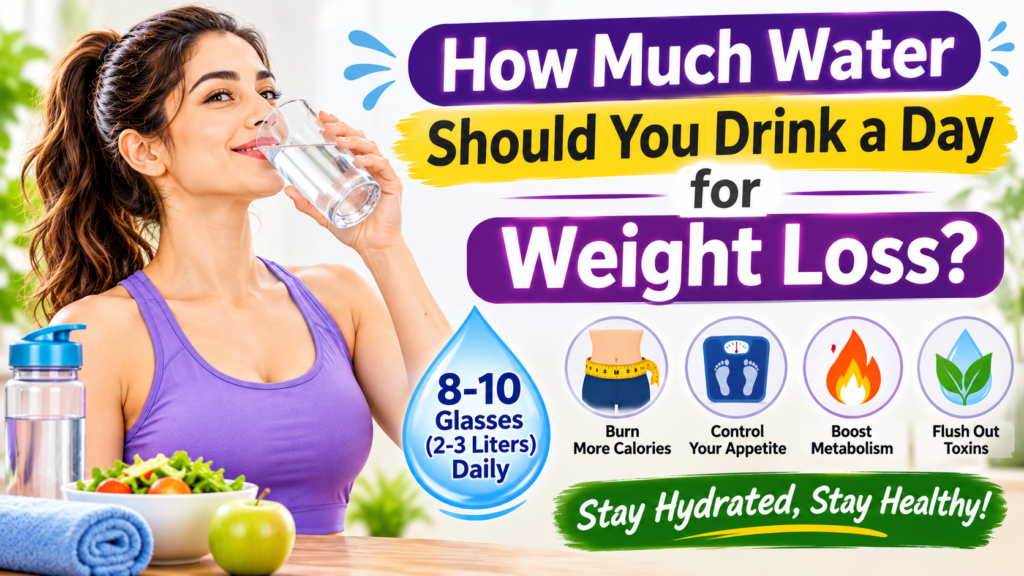
Quick Answer: How much water should you drink a day for weight loss? About 2.7 litres a day, or roughly 11 cups, is a good target for most women, with more on hot days or when you exercise. Drink a glass before meals, sip through the day, and let pale yellow urine be your guide.
Table of Contents
- How Much Water Should You Drink a Day for Weight Loss?
- How Water Helps Weight Loss
- How Much Water Do You Actually Need?
- When to Drink Water for Weight Loss
- Hunger vs. Thirst: How to Tell the Difference
- Water and Exercise: Walking, Workouts, and Hot Days
- Best Drinks vs. Drinks That Work Against You
- Mistakes That Waste the Benefits of Water
- Frequently Asked Questions
- Final Verdict
If you are asking how much water should you drink a day for weight loss, here is the short answer first: about 2.7 litres a day, or roughly 11 cups, is a good target for most women. That figure includes water from food as well as drinks, so the amount you need to drink is usually a little less than 2.7 litres. You will need more on hot days, when you exercise, or when you eat a lot of salty food, and a little less on cool, quiet days.
Water will not melt fat on its own, and no article that promises that is telling you the truth. But water is one of the most useful weight loss tools there is, because it works in quiet, practical ways: it fills your stomach before a meal, it replaces drinks that carry hundreds of calories, it helps you tell thirst from hunger, and it keeps your energy and digestion steady. A woman who drinks enough water finds it easier to stay in a calorie deficit, and staying in the deficit is what actually causes weight loss.
This guide explains the 2.7 litre target in plain language, shows you when to drink for the best effect, helps you tell hunger from thirst, and gives you a simple daily plan you can follow without counting every glass. If you are building your weight loss plan from the beginning, our guide on weight loss tips for women covers the basics that make hydration work even better.
How Much Water Should You Drink a Day for Weight Loss?
The 2.7 litres a day figure comes from the National Academies of Sciences, Engineering, and Medicine in the United States, which sets an adequate intake of about 2.7 litres of total water a day for adult women, and about 3.7 litres for adult men. Total water includes the water in food, which usually provides about 20 percent of the total, so the amount to drink is roughly 2.2 litres, or about 9 cups, from drinks alone. In practice, most guides round this to 2.7 litres of fluids a day, and that is the number used in this article.
That number is a starting point, not a prescription. Your body size, your activity, the weather, and the food you eat all change how much you need. A tall, active woman who walks 10,000 steps on a hot day needs more than a smaller woman who spends the day indoors in cool weather. A woman who eats a lot of fruit, vegetables, and soups gets more water from food and needs less from drinks. A woman who eats a lot of salty food or drinks alcohol needs more.
The simplest check is the colour of your urine. Pale yellow means you are drinking enough. Dark yellow means you need more water. Completely clear urine, all day, every day, can mean you are drinking more than you need. Thirst is also a useful guide, but by the time you feel very thirsty, you are already mildly dehydrated, so do not wait for thirst alone. Sip regularly through the day, and use urine colour as a gentle check rather than a strict test.
| Your day | Suggested water target | What changes it |
|---|---|---|
| Normal day, indoors, light activity | About 2.7 litres total | Food provides about 20 percent |
| Active day, walking 8,000–10,000 steps | About 3.0–3.3 litres | Sweat and breathing losses rise |
| Hot day or a workout with sweating | About 3.3–3.7 litres or more | Replace sweat as you go |
| Pregnant | About 3.0 litres total | Ask your doctor for your own target |
| Breastfeeding | About 3.8 litres total | Ask your doctor for your own target |
| High-fiber diet | Stay at or above 2.7 litres | Fiber needs water to work well |
If you are pregnant or breastfeeding, or you have a kidney, heart, or other medical condition that affects fluid intake, do not set your own target from an article. Ask your doctor what is right for you. The numbers in this article are for healthy adult women, and they are a guide, not medical advice.
How Water Helps Weight Loss
Water helps weight loss in four clear ways, and each one is practical rather than magical. First, water fills your stomach. Drinking a glass of water before a meal takes up space, so you feel full sooner and eat a little less. Studies have found that people who drink about 500 ml of water before a meal eat fewer calories at that meal, and over weeks that difference adds up. It is not a dramatic effect, but a small saving at every meal is exactly how a 300 to 500 calorie deficit is built.
Second, water replaces calorie-containing drinks. A single can of fizzy drink contains about 140 calories, a large sweetened coffee can contain 300 calories or more, and fruit juice contains almost as much sugar as a fizzy drink. If you replace two sweet drinks a day with water, you can save 200 to 400 calories a day without feeling hungry at all, because water does not make you hungry and the sweet drink does not make you full. For many women, this one swap is the easiest calorie saving in their whole day.
Third, water helps you tell thirst from hunger. Many women mistake thirst for hunger, especially in the afternoon. A glass of water and a ten-minute wait is often enough to tell the difference: if the feeling fades, it was thirst or tiredness. If you are still hungry, eat something with protein and fiber. That simple test prevents a surprising number of unnecessary snacks.
Fourth, water supports the body systems that weight loss depends on. It helps digestion, it helps fiber do its job, it helps your body move waste out, and it keeps your energy steadier. Mild dehydration can cause tiredness, headaches, and poor concentration, and a tired woman is far more likely to reach for a sweet snack and skip a walk. Staying hydrated does not burn fat directly, but it removes several obstacles that make weight loss harder.
Does cold water burn more calories?
You may have heard that drinking cold water burns calories because your body has to warm it up. That is true, but the effect is tiny: roughly 8 calories per glass of cold water, which is not enough to matter for weight loss. Drink water at the temperature you enjoy, because the water you enjoy is the water you will actually drink. Cold, room temperature, or warm with lemon are all fine. The amount and the timing matter far more than the temperature.
Water and your metabolism
Some studies have found a small, short-term rise in metabolic rate after drinking water, sometimes called water-induced thermogenesis. The effect is real but modest, and it lasts for less than an hour. It is not a reason to drink excessive amounts of water, and it is not a weight loss method on its own. The real value of water is in appetite, in replacing sweet drinks, and in steady energy, not in a small metabolic boost. Think of water as a support tool for your calorie deficit, not as a fat burner.
How Much Water Do You Actually Need?
The 2.7 litre target is useful, but it helps to know where that water comes from. About 20 percent comes from food, especially fruit, vegetables, soups, and yogurt. Watermelon, cucumber, oranges, and lettuce are more than 90 percent water. A bowl of soup can provide 300 to 400 ml. That means the amount you need to drink is usually about 2.2 litres, or about 9 cups, and the rest comes from food.
If you eat a lot of fruit and vegetables, you may need less from drinks. If you eat mostly dry, salty, or processed food, you will need more. This is one more reason to eat fruit, vegetables, and soups: they hydrate you while they fill you up, which is exactly what a weight loss diet needs.
| Source | Water per serving |
|---|---|
| Glass of water (250 ml) | 250 ml |
| Cup of unsweetened tea | About 240 ml |
| Bowl of vegetable soup | About 300–400 ml |
| Medium orange | About 120 ml |
| Cup of watermelon | About 140 ml |
| Small pot of yogurt | About 120 ml |
| Cucumber, half | About 100 ml |
A practical way to reach your target without counting is to use a bottle. Fill a 1-litre bottle in the morning, drink it by lunch, refill it, and drink it by dinner. That alone gives you 2 litres, and your morning tea, your food, and a glass with dinner take you to the target. If you prefer cups, aim for about 8 to 9 cups of fluid through the day, plus the water in your food.
When to Drink Water for Weight Loss
When you drink matters almost as much as how much you drink. The most useful time is before a meal. Drink a glass of water, about 250 to 500 ml, about 30 minutes before lunch and dinner. That gives the water time to fill your stomach and gives you a moment to slow down before eating. Many women find they eat noticeably less at the meal, without feeling deprived.
The second useful time is in the morning. Drink a glass of water when you wake up, before tea or coffee. You have gone seven or eight hours without fluid, and a glass of water helps you feel alert and starts the day hydrated. It also gives you a head start on the daily target, which makes the rest of the day easier.
The third useful time is when a craving hits. Drink a full glass of water and wait ten minutes before deciding to eat. Many cravings fade in that time, and if you are still hungry after ten minutes, you can eat a proper snack with protein and fiber. Water is not a substitute for food when you are genuinely hungry, but it is a useful test for whether you are hungry at all.
| Time | What to drink | Amount |
|---|---|---|
| On waking | Glass of water | 250 ml |
| With breakfast | Water or unsweetened tea | 250 ml |
| Mid-morning | Water, sip through the morning | 250–500 ml |
| 30 min before lunch | Glass of water | 250–500 ml |
| With lunch | Water or sparkling water | 250 ml |
| Mid-afternoon | Water or unsweetened tea | 250–500 ml |
| 30 min before dinner | Glass of water | 250–500 ml |
| With dinner | Water | 250 ml |
| Evening | Small glass or herbal tea | 150–250 ml |
Try not to drink a large amount of water late at night, because it can disturb your sleep with trips to the bathroom. A small glass or a cup of herbal tea in the evening is fine. Most of your water should be drunk during the day, spread out in small amounts rather than in one large burst.
Hunger vs. Thirst: How to Tell the Difference
Hunger and thirst feel similar, especially when you are busy, tired, or stressed. Both arrive as a vague discomfort, a restlessness, or a sudden urge to eat something. The difference matters, because the solution is different: hunger needs food, thirst needs water, and tiredness needs rest. Eating when you are actually thirsty adds calories without solving the problem, and the craving returns within the hour.
- Physical hunger builds gradually, it is satisfied by many foods, it comes with an empty stomach or a rumbling stomach, and it stops when you are full.
- Thirst often comes with a dry mouth, a headache, tiredness, or dark yellow urine, and it fades after a glass of water.
- A craving arrives suddenly, wants one specific food, usually sweet or salty, and does not stop when you are full.
- Tiredness feels like hunger in the afternoon, but it is really your body asking for rest or a short walk, not for sugar.
The ten-minute water test is the simplest way to tell them apart. When you feel hungry between meals, drink a full glass of water, wait ten minutes, and then ask yourself how you feel. If the feeling has faded, it was probably thirst or tiredness. If you are still hungry, eat something with protein and fiber, such as yogurt with fruit, an apple with nuts, or a small portion of leftovers. That test prevents a large number of unnecessary snacks, and it costs nothing.
Water and Exercise: Walking, Workouts, and Hot Days
Water and movement work together for weight loss. Walking is the easiest exercise for most women, and it is also the easiest to combine with good hydration. A woman who walks 8,000 to 10,000 steps a day, as part of a weight loss plan, needs more water than a woman who is mostly sitting, because she loses water through sweat and breathing. The extra amount is usually 300 to 600 ml a day, or about one or two extra glasses.
For normal walking and moderate exercise lasting less than an hour, plain water is enough. You do not need a sports drink, which usually contains sugar and calories that work against weight loss. Drink a glass before you go out, carry a bottle if you will be out for more than 30 minutes, and drink again when you return. On hot days, drink more often and in smaller amounts, rather than waiting until you feel very thirsty.
For longer or very sweaty workouts, lasting more than an hour, you may need to replace salt as well as water, and food after the workout usually provides that. If you exercise hard in the heat and feel dizzy, confused, or very unwell, stop and seek medical help. Those are signs of heat illness, not normal thirst. For most women, the rule is simple: drink before, during, and after movement, and let pale yellow urine be your guide. Our guide on walking for weight loss explains how to build up your daily steps safely, and water is part of that plan.
Water inside a calorie deficit
Water does not create a calorie deficit on its own, but it makes the deficit easier to keep. A safe deficit is 300 to 500 calories a day, which usually leads to losing about 0.5 to 1 lb a week. Water supports that deficit in three ways: it fills your stomach before meals, it replaces sweet drinks, and it helps fiber work properly. If you are trying to calculate your calorie deficit, remember that the number is only useful if you can keep it comfortably for weeks, and water is one of the tools that makes comfort possible.
Never drop below 1,200 calories a day without medical supervision. Below that level, it becomes very hard to get enough protein, fiber, vitamins, and minerals, and the risk of losing muscle instead of fat goes up sharply. Water cannot fix a diet that is too low in calories, and drinking excessive amounts of water cannot make a very low-calorie diet safe.
Best Drinks vs. Drinks That Work Against You
Best drinks for weight loss
- Plain water: no calories, no sugar, and the best choice most of the time.
- Sparkling water: fizzy and satisfying, with no calories, especially with lemon or berries.
- Unsweetened tea: green, black, or herbal tea, hot or iced, with no sugar.
- Black coffee: very few calories on its own, but sweetened coffee drinks can contain 300 calories or more.
- Water with fruit: water infused with cucumber, lemon, mint, or berries for flavour without sugar.
Drinks that work against weight loss
- Fizzy drinks: about 140 calories per can, with no fullness at all.
- Fruit juice: almost as much sugar as a fizzy drink, with almost no fiber. Eat the fruit instead.
- Sweetened coffee and tea: sugar, syrup, and cream can turn a 5-calorie drink into a 300-calorie dessert.
- Energy drinks: high in sugar and caffeine, with no benefit for weight loss.
- Alcohol: about 7 calories per gram, plus it worsens sleep and lowers your control over food choices.
The pattern is simple: the best drinks give you fluid with no calories, and the worst drinks give you calories with no fullness. If you currently drink two sweet drinks a day, replacing them with water saves roughly 200 to 400 calories a day, which is most of a 300 to 500 calorie deficit on its own. That is why water is often the easiest first change in a weight loss plan.
Mistakes That Waste the Benefits of Water
- Waiting until you are very thirsty. By then you are already mildly dehydrated, and you are more likely to reach for a sweet drink instead of water.
- Drinking most of your water at night. A large amount late at night disturbs sleep, and poor sleep makes cravings stronger the next day.
- Counting only water, not food. Fruit, vegetables, soups, and yogurt all provide water, so a diet rich in those foods needs less from drinks.
- Drinking sweet drinks and calling it hydration. Fizzy drinks and juice do provide fluid, but they also provide sugar and calories that work against weight loss.
- Drinking too much at once. A litre in ten minutes is uncomfortable and unnecessary. Sip through the day instead.
- Thinking water alone causes weight loss. Water supports a calorie deficit, but it does not replace it. You still need to eat a little less, eat enough protein, and move daily.
- Ignoring the signs of drinking too much. Very clear urine all day, frequent urination, nausea, or confusion after drinking large amounts can be signs of overhydration. Drink to thirst and to pale yellow urine, not to an extreme target.
Frequently Asked Questions
Can drinking more water help me lose weight?
Yes, as a support tool. Drinking water before meals can reduce how much you eat, and replacing sweet drinks with water can save 200 to 400 calories a day. Water alone does not burn fat, but it makes a 300 to 500 calorie deficit easier to keep, and that deficit is what causes weight loss of about 0.5 to 1 lb a week.
How much water should I drink if I am trying to lose weight?
About 2.7 litres of total water a day is a good target for most women, including water from food. Drink more on hot days, when you exercise, or when you eat a lot of salty food. Let pale yellow urine and your own thirst guide you, rather than forcing an extreme amount.
Does drinking water before meals really work?
For many people, yes. Studies have found that drinking about 500 ml of water before a meal can reduce calorie intake at that meal. The effect is modest, but a small saving at lunch and dinner, every day, adds up over weeks. Drink the water about 30 minutes before the meal for the best effect.
Can I drink too much water?
Yes, although it is uncommon. Drinking very large amounts in a short time can lower sodium in the blood, which is dangerous. For most healthy women, drinking to thirst, aiming for about 2.7 litres a day, and letting urine colour guide you is safe. If you have a kidney, heart, or other condition that affects fluid intake, ask your doctor for your own limit.
Does tea and coffee count as water?
Yes, unsweetened tea and coffee do count toward your fluid intake, because they are mostly water. Caffeine has a mild diuretic effect, but it does not cancel out the fluid. Sweetened tea and coffee also provide fluid, but they add sugar and calories, so they are not good choices for weight loss.
Will drinking water reduce bloating?
Often, yes. Mild dehydration and a high-fiber diet without enough water can both cause bloating and constipation. Drinking enough water helps fiber work properly and helps your body move waste out. If bloating is severe, persistent, or painful, talk to your doctor, because it can have other causes.
Final Verdict
How much water should you drink a day for weight loss? About 2.7 litres a day is a good target for most women, with more on hot days and when you exercise. Water helps weight loss not by burning fat, but by filling your stomach before meals, replacing sweet drinks that carry hundreds of calories, and helping you tell thirst from hunger. Drink a glass on waking, a glass before lunch and dinner, and sip through the day rather than drinking a large amount at once. Pair that habit with a modest 300 to 500 calorie deficit, 30 to 40 grams of protein at each meal, and a daily walk, and you have a plan that is simple, comfortable, and sustainable at about 0.5 to 1 lb a week. Start tomorrow with a bottle on your desk and a glass before lunch. For more practical, research-based weight loss guides, visit the HealthSpots homepage.
Medical Disclaimer: This article is for general information only and is not medical advice. It does not replace guidance from your doctor or a registered dietitian. If you have kidney disease, heart disease, diabetes, or any other medical condition that affects fluid intake, or if you are pregnant or breastfeeding, talk to your healthcare provider before changing how much water you drink. Do not follow a diet below 1,200 calories a day without medical supervision.