
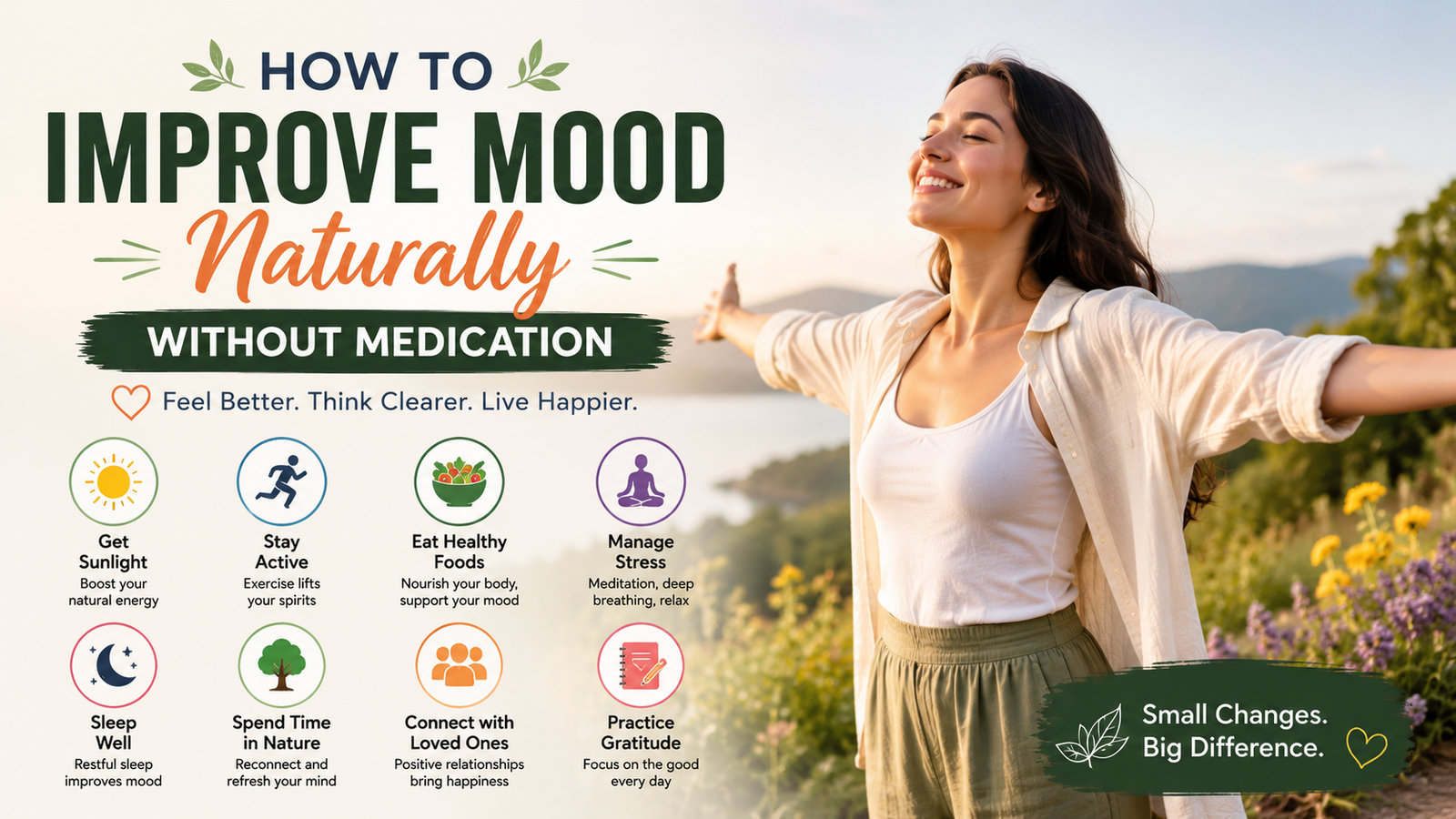
Quick Answer: To improve mood naturally without medication, use everyday lifestyle levers: morning daylight, daily walking, balanced meals with enough protein, regular sleep, and time with people you trust. Small habits — light, movement, food, sleep, and connection — lift mood gradually over two to four weeks, and they work best when you use several of them together every day.
Table of Contents
If you want to know how to improve mood naturally without medication, the first thing to know is that your mood is not a mystery, and it is not fixed. It rises and falls with what you do each day — how much light you get, how much you move, what you eat, how you sleep, and how much time you spend with people who matter to you. Change those daily levers, and your mood usually follows within two to four weeks.
This article is about lifestyle only. It does not give advice about medicine, doses, or brands, and it is not a substitute for professional care. If low mood lasts for weeks, or if it comes with hopelessness, loss of interest, or thoughts of harming yourself, please talk to a doctor — that is the right and sensible step, and this article will explain exactly when to take it.
What this article does give you is eight everyday levers, each one simple, each one supported by research, and each one free or nearly free. You will learn how morning light and movement set your mood for the day, which foods support a steadier mood, why sleep is the lever most people skip, and how small wins and human connection quietly rebuild a low mood. There is also a simple daily plan that puts all eight levers into one ordinary day.
If stress is part of your low mood, our guide on how to reduce stress and anxiety naturally is a good companion to this one. And if you are new to healthy living in general, our guide on weight loss tips for women explains how food, movement, and sleep work together for your health.
What Really Shapes Your Mood Each Day
Mood feels personal and mysterious, but it is built from ordinary daily inputs. Your brain runs on light, movement, food, sleep, and social contact — and when any of these run low, mood drops. When they are steady, mood is steadier too. This is why a bad week often has a simple pattern behind it: late nights, little daylight, skipped meals, no exercise, and no real conversation.
Light is the first input. Your brain uses daylight to set your body clock, which controls when you feel alert and when you feel sleepy, and it also affects the chemicals linked to mood. People who spend the whole day indoors often feel flat and low by the afternoon, even if nothing bad happened. Morning daylight is the strongest version of this signal, which is why the first lever in this guide is light.
Movement is the second input. Physical activity is one of the most reliable natural mood lifters in research — it raises energy, reduces tension, and improves sleep, which lifts the next day’s mood in turn. It does not need to be intense. A brisk walk works, and it works for almost everyone.
Food is the third input. Your brain needs steady fuel, and big swings in blood sugar — a skipped breakfast, a very sugary lunch, a long gap with no food — make mood swing with them. Regular meals with enough protein keep energy and mood steadier through the day.
Sleep is the fourth input, and it is the one most people skip. One short night makes the next day’s mood noticeably worse: more irritation, less patience, and a stronger pull toward negative thoughts. Several short nights in a row can make a normal week feel like a bad one.
Social contact is the fifth input. Humans are built for connection, and loneliness lowers mood even when everything else is fine. A short conversation, a shared meal, or a message to a friend can lift a day more than any single habit on this list.
None of these inputs works alone. Mood is the sum of all five, which is why the plan in this article uses several levers together, every day, rather than betting everything on one change.
The mood levers at a glance
| Lever | What it does for mood | Time it takes each day |
|---|---|---|
| Morning daylight | Sets body clock, lifts alertness | 10–20 minutes |
| Daily walking | Raises energy, lowers tension | 20–30 minutes |
| Balanced meals with protein | Steadies blood sugar and energy | No extra time |
| Regular sleep, 7–9 hours | Resets mood for the next day | No extra time |
| Time with people | Reduces loneliness, adds warmth | 10–30 minutes |
| Small wins and purpose | Builds a sense of progress | 10–20 minutes |
| Less alcohol and late caffeine | Protects sleep and next-day mood | No extra time |
| A calm wind-down evening | Lowers stress before bed | 30 minutes |
How to Improve Mood Naturally Without Medication: 8 Everyday Levers
These eight levers are listed in the order that most people find easiest to start. You do not need all eight on day one. Pick three, use them every day for two weeks, and then add more. Mood changes gradually, so give the plan at least two to four weeks before judging it.
Lever 1 — Get morning daylight
Go outside within an hour of waking, for ten to twenty minutes. Walk, sit in the garden, or eat breakfast near a bright window. Morning light is the strongest signal for your body clock, and it helps your brain feel alert in the day and sleepy at night. Even on a cloudy day, outdoor light is far brighter than indoor light. If you work indoors all day, take lunch outside when you can — the midday light helps too.
Lever 2 — Move your body every day
A brisk walk of twenty to thirty minutes is enough to lift mood on most days. It works even better outdoors, where light and fresh air add to the effect. If walking feels dull, try dancing, gardening, cycling, or gentle stretching — the best movement for mood is the one you will actually do tomorrow. Add two or three short strength sessions a week if you can; strength training builds confidence as well as muscle, and it supports healthy weight too.
Lever 3 — Eat regular, balanced meals
Skipping meals is one of the fastest ways to ruin a day’s mood. Eat three regular meals, with 30–40 grams of protein at each one — eggs, yogurt, lentils, beans, fish, or chicken — and plenty of vegetables and whole grains. Protein keeps you full and keeps your energy steady, which means fewer crashes and fewer cravings. If you are losing weight, a safe calorie deficit of 300–500 calories a day is enough to lose about 0.5–1 lb a week. Never drop below 1,200 calories a day without medical supervision — very low calorie intake lowers mood and energy sharply.
Lever 4 — Protect your sleep
Sleep and mood are locked together. A short night makes the next day feel worse in every way — more irritation, less patience, and a stronger pull toward negative thoughts. Keep the same bedtime and wake time every day, stop caffeine after noon, and wind down without screens for the last hour before bed. Aim for seven to nine hours a night. Our guide on how to sleep better at night naturally goes through the full sleep routine step by step.
Lever 5 — Spend time with people
Connection is a powerful mood lever, and it does not need to be deep or long. A ten-minute call with a friend, a shared meal with family, a chat with a neighbour — all of them count. If you feel isolated, start small: one message a day to someone you like, or one shared activity a week. Joining a group — a walking group, a class, a volunteer project — gives you regular contact without the pressure of arranging it each time.
Lever 6 — Do one small thing that matters
Low mood often comes with a feeling of getting nowhere. A small daily win breaks that feeling. Choose one small, useful task each morning — tidy one drawer, finish a short walk, cook a simple meal, reply to one email — and do it before anything else. The task itself does not matter much. What matters is the feeling of progress. Over days, small wins add up into a sense that you are moving forward again.
Lever 7 — Limit alcohol and late caffeine
Alcohol can feel relaxing for an hour, but it disturbs sleep and lowers next-day mood. Many people notice that their mood is much worse the morning after drinking. If you drink, keep it moderate and avoid alcohol in the hours before bed. Caffeine late in the day has a similar effect: it steals sleep, and poor sleep steals the next day’s mood. Keep caffeine to the morning only.
Lever 8 — End the day calmly
The last hour before bed shapes the next morning. Dim the lights, put the phone away, and do something calm — a warm shower, light reading, gentle stretching, or writing down three good things from the day. A calm evening means a calmer night, and a calmer night means a better morning. It also gives your mind a positive note to end on, instead of the day’s worries.
Morning Light and Movement
The first two hours of the day set the tone for the rest of it, and they are the easiest hours to improve. A rushed, screen-filled morning — phone in bed, no daylight, no breakfast, straight into stress — starts the day with low energy and a low mood. A calm morning with light, movement, and food starts it the other way.
Try this simple morning template. Wake at the same time every day. Drink a glass of water. Step outside for ten to twenty minutes — a walk, or simply breakfast near a bright window. Eat a breakfast with protein: eggs, yogurt with fruit, or lentils and whole-grain bread. Do one small useful thing before you check your phone. That is the whole routine, and it takes less than an hour.
Movement in the morning has a special benefit: it raises energy for the whole day, not just for the hour after. A brisk twenty-minute walk before work, or a short stretch and a walk at lunch, is enough. If mornings are too busy, move at lunch instead — the benefit is nearly the same. What matters is that movement happens most days, not that it happens at a perfect time.
Sunlight also matters in winter, when days are short and many people feel lower. If you feel much worse in the winter months, get outside in the middle of the day when the light is brightest, and talk to a doctor — some people benefit from a light therapy lamp or extra support during the dark months. You do not have to accept a low winter mood as normal.
Food That Supports a Steadier Mood
Food will not cure low mood, but it can make it better or worse, and the pattern is simple: steady fuel means steadier mood. Big swings in blood sugar — a skipped breakfast, a very sugary snack, a long gap with no food — make energy and mood swing with them. Regular meals with protein, fibre, and healthy fats keep both steadier.
Start with breakfast. Many women skip it and then feel flat and irritable by mid-morning. A breakfast with protein — eggs, Greek yogurt, or lentils with whole-grain bread — keeps you full and steady until lunch. A pastry and coffee, by contrast, gives a quick lift and then a crash. The difference is noticeable within a day or two of changing.
Lunch and dinner follow the same rule: half the plate vegetables or salad, a palm-sized portion of protein, and a moderate portion of whole grains or starchy food such as rice, potatoes, or bread. Add a small handful of nuts or seeds, and use olive oil rather than heavy creamy sauces. This is the same balanced plate used in our weight loss guides, because it works for energy and mood as well as for weight.
| Supports a steadier mood | Tends to drag mood down |
|---|---|
| Regular meals with protein at each meal | Skipping meals, then overeating later |
| Vegetables, fruit, whole grains, beans, lentils | Large amounts of sugar and refined snacks |
| Oily fish, eggs, yogurt, nuts, seeds | Very heavy, fatty meals that cause sluggishness |
| Water through the day | Sugary drinks and energy drinks |
| A small piece of dark chocolate as a treat | Alcohol in the evening |
| Herbal tea in the evening | Too much caffeine, especially after noon |
A note on caffeine: it can lift mood briefly, but too much of it, or caffeine late in the day, raises restlessness and steals sleep. Keep it to one or two cups in the morning. If you feel calmer and steadier within a week of cutting back, caffeine was part of the problem.
Staying hydrated helps too. Even mild dehydration can cause tiredness, headaches, and a low mood. Keep a bottle of water nearby and drink through the day, rather than waiting until you feel very thirsty.
Sleep: The Mood Lever Most People Skip
Sleep is the mood lever people skip most often, and it is the one with the fastest effect. One short night makes the next day noticeably worse: more irritation, less patience, more negative thoughts, and stronger cravings. Several short nights in a row can make an ordinary week feel like a bad one, even when nothing else has changed.
The fix is a regular schedule. Go to bed and wake up at the same time every day, including weekends. Your body clock learns the pattern within one to two weeks, and falling asleep becomes easier. Aim for seven to nine hours a night — most adults need that much, even if they feel they can survive on less.
Build a wind-down routine for the last thirty to sixty minutes before bed. Dim the lights, put the phone away, and do something calm: a warm shower, light reading, gentle stretching, or writing down three good things from the day. Avoid heavy meals, bright screens, and difficult conversations in that final hour.
Your bedroom matters too. Keep it cool, dark, and quiet — around 18–20°C (65–68°F) works for most people. If you lie awake for more than twenty minutes, get up and do something calm in dim light until you feel sleepy, then return to bed. Lying awake and worrying about not sleeping only makes it worse.
Sleep also connects to weight. Short sleep raises the hunger hormone ghrelin and lowers the fullness hormone leptin, so you feel hungrier the next day and crave sugary food. Managing sleep is therefore a real part of both mood and healthy weight, not a luxury to fit in when everything else is done.
People, Purpose, and Small Wins
Human connection is one of the strongest natural mood lifters, and it is often the first thing people drop when they feel low. That is understandable — low mood makes you want to withdraw — but withdrawal makes the mood worse. Breaking the circle takes a small first step, not a big one.
Start with one connection a day. A short call, a message to a friend, a shared meal, or a chat with a neighbour all count. You do not need a deep conversation — a friendly exchange is enough to remind your brain that you belong somewhere. If you have been isolated for a while, a regular group helps more than one-off contact: a walking group, a class, a volunteer project, or a regular family meal gives you connection without the effort of arranging it each time.
Purpose works the same way. Low mood often comes with a feeling that nothing matters or that you are getting nowhere. A small daily purpose — a task that helps someone else, a project you care about, a skill you are learning — gives the day shape. It does not need to be big. Cooking a meal for your family, helping a neighbour, finishing a chapter of a book, or tending a plant all count as purpose when they are done with care.
Small wins are the practical version of purpose. Each morning, choose one small, useful task and do it first: tidy one drawer, take a short walk, reply to one email, cook a simple meal. The task itself is small. The feeling of progress is not. Over days and weeks, small wins rebuild the sense that you can act, and that feeling is one of the strongest antidotes to low mood.
Gratitude is a quieter tool, but it works. Each evening, write down three things that went well today, even small ones — a good meal, a kind word, a walk in the sun. This is not forced positivity. It is training your brain to notice the good alongside the bad, because a low mood makes the brain scan only for problems. Two minutes a day is enough.
A Simple Daily Mood Plan
Here is a full day that puts all eight levers together. It is an ordinary day, not a perfect one — and that is the point. A plan you can follow on an ordinary day is worth far more than a perfect plan you follow once.
| Time | What to do | Which lever |
|---|---|---|
| Wake, same time daily | Glass of water, open curtains, step outside | Light, regular sleep |
| Morning | 10–20 minutes outdoors, then a protein breakfast | Light, food, movement |
| Before phone | One small useful task — tidy, walk, or reply to one email | Small win, purpose |
| Midday | Brisk 20–30 minute walk, lunch outside if possible | Movement, light, food |
| Afternoon | One message or call to a friend or family member | Connection |
| Evening | Cook a simple balanced meal, eat together if you can | Food, connection |
| Last hour | Dim lights, phone away, warm shower, light reading | Wind-down, sleep |
| Bedtime | Same time daily, cool dark room, three good things written down | Sleep, gratitude |
Start with three levers, not all eight. Most people do best starting with morning light, a daily walk, and a regular sleep schedule, because these three improve energy fastest. Add food and connection in the second week, and the rest in the third. After two to four weeks of steady habits, most people notice a real lift: more energy in the morning, steadier mood in the afternoon, and easier sleep at night.
Keep a simple mood note for two weeks. Each evening, rate your mood from 1 to 10 and write one line about what helped. Patterns appear quickly: maybe walk days score higher, or maybe late coffee days score lower. Once you see your own pattern, you can protect what helps and cut what hurts.
When Low Mood Needs Professional Support
Lifestyle levers help a great deal, but they have limits, and knowing those limits is part of looking after yourself. Please talk to a doctor or a mental health professional if low mood lasts for two weeks or more, if you have lost interest in things you used to enjoy, or if you feel hopeless, empty, or worthless most days.
Other signs that deserve professional help include: sleeping far too much or far too little most nights, eating much more or much less than usual, feeling tired all the time despite rest, finding it hard to concentrate or make decisions, and withdrawing from friends and family. If low mood comes with constant worry, panic, or physical symptoms such as a racing heart or stomach problems, that also deserves attention.
A doctor can check for medical causes, such as thyroid problems, low iron, or vitamin deficiency, and can suggest talking therapy or other support. Talking therapy, such as cognitive behavioural therapy, helps many people with low mood, and it works well alongside the lifestyle habits in this article. This article gives lifestyle information only — it does not give advice about medicine, doses, or brands, and any decision about treatment belongs with you and your doctor.
If you ever feel you might harm yourself, or you feel unsafe, please contact a mental health crisis line in your country or go to your nearest emergency department right away. You do not have to face this alone, and help is available. Asking for help is a strong and sensible step, not a sign of weakness.
Frequently Asked Questions
How can I improve my mood naturally without medication?
Use everyday lifestyle levers together: morning daylight, a daily walk, regular meals with protein, seven to nine hours of sleep, and time with people you trust. Small habits — light, movement, food, sleep, and connection — lift mood gradually over two to four weeks, and they work best when you use several of them every day.
How long does it take for lifestyle changes to lift mood?
Most people notice small changes within one to two weeks — slightly more energy, easier sleep, or a calmer afternoon. A real, steady lift in mood usually takes two to four weeks of consistent habits. If you feel no improvement after a month, or if low mood is getting worse, talk to a doctor.
Does exercise really help mood?
Yes. Regular movement is one of the most studied natural mood lifters. A brisk twenty to thirty minute walk most days raises energy, lowers tension, and improves sleep, which lifts the next day’s mood in turn. It does not need to be intense — walking outdoors works, and it works for almost everyone.
What foods help mood?
Regular meals with protein at each meal, plenty of vegetables and whole grains, and healthy fats from nuts, seeds, and oily fish support a steadier mood. Skipping meals and eating large amounts of sugar make mood swing. Staying hydrated and keeping caffeine to the morning also help.
Can poor sleep cause low mood?
Yes. One short night makes the next day’s mood noticeably worse, and several short nights in a row can make an ordinary week feel bad. Keeping the same bedtime and wake time, stopping caffeine after noon, and winding down without screens are the fastest ways to protect both sleep and mood.
When should I see a doctor about low mood?
See a doctor if low mood lasts two weeks or more, if you have lost interest in things you used to enjoy, if you feel hopeless or worthless, or if low mood interferes with work, sleep, or relationships. If you ever feel you might harm yourself, contact a mental health crisis line or seek emergency help right away.
Final Verdict
Learning how to improve mood naturally without medication is not about one big change. It is about eight small levers — morning light, daily movement, balanced food, regular sleep, time with people, small wins, limits on alcohol and late caffeine, and a calm evening — used together, every day, for a few weeks. Start with three levers, add more as they become habits, and give the plan two to four weeks before judging it.
Be patient and kind to yourself. Mood built over months will not lift in a weekend, but most people notice real change within a few weeks of steady habits: more energy in the morning, a steadier afternoon, and easier sleep at night. And if low mood lasts for weeks, takes away your interest in life, or makes you feel hopeless, please talk to a doctor or a mental health professional. This article is about lifestyle only — it is not a substitute for professional care, and asking for help is a strong step.
For more practical health guides from HealthSpots, visit HealthSpots and explore the Mental Health and Weight Loss sections.
Disclaimer
This article is for general information only and is not medical advice. It does not replace professional diagnosis or treatment. This article gives lifestyle information only and does not give advice about medicine, doses, or brands. If you have a health condition, take regular treatment, or feel your symptoms are severe or getting worse, please talk to a qualified healthcare professional. If you are in crisis or feel you may harm yourself, contact a mental health crisis line in your country or seek emergency help immediately.