
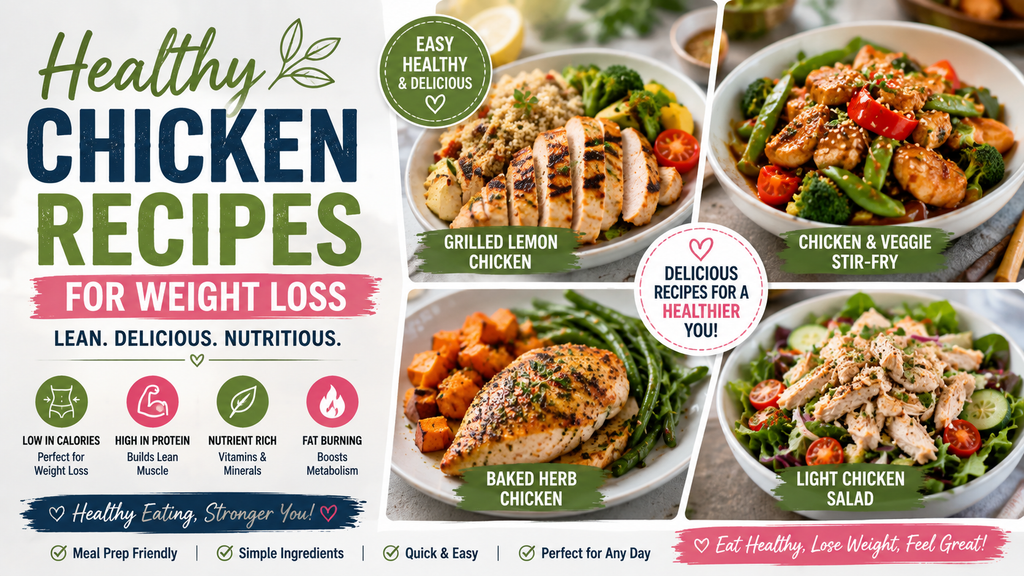
Quick Answer: Healthy chicken recipes for weight loss work because chicken is lean, high in protein, and easy to cook. The best dinners use skinless breast or trimmed thigh, plenty of vegetables, and grilling or baking. With 30–40 g of protein per meal and a 300–500 kcal/day deficit, these meals keep you full and support loss of about 0.5–1 lb/week.
Table of Contents
Chicken is one of the most reliable foods in any weight-loss plan: lean, filling, and affordable. The problem is not chicken itself — it is what happens to it in the kitchen. A skinless grilled chicken breast is a genuinely healthy meal; the same chicken deep-fried and served with creamy sauce is a very different story. This guide to healthy chicken recipes for weight loss shows you how to keep chicken on the healthy side of that line, with ten complete dinners you can cook at home, each with its calories and protein counted.
Every recipe here follows the same three principles: lean chicken (skinless breast or trimmed thigh), a low-fat cooking method such as grilling or baking rather than deep frying, and a properly built plate — a palm-sized portion of chicken, half the plate filled with vegetables, and a modest serving of whole grains. Together, these keep you full for hours on a reasonable number of calories.
Why Chicken Works So Well for Weight Loss
A 4-ounce serving of cooked skinless chicken breast contains roughly 165 calories and about 31 g of protein, with less than 4 g of fat — an unusually high ratio of protein to calories. Protein is the most filling macronutrient, so people who eat more of it at meals feel fuller for longer and find it easier to stay within their calorie target.
Protein also protects your muscle while you lose weight. When you eat fewer calories than you burn, your body draws on both fat and muscle for energy. Eating around 30–40 g of protein per meal, combined with some resistance exercise, helps your body burn fat while holding on to muscle, which keeps your metabolism higher. Chicken is also practical — widely available, inexpensive, quick to cook, and able to take on almost any flavour. If you are also working on reducing fat around your waist, see this guide on how to lose belly fat naturally for women, which explains why overall fat loss, rather than any single food, shrinks your waistline.
Best Cuts: Chicken Breast vs Thigh
Not all chicken is equal for weight loss. Chicken breast is the leanest option, which is why it appears in most recipes below. Chicken thigh is richer and more forgiving — it stays juicy even if slightly overcooked — but it carries more fat and calories, especially with the skin on. Neither cut is wrong; choose by your calorie budget and taste.
| Cut (4 oz, cooked) | Calories | Protein | Fat | Best For |
|---|---|---|---|---|
| Skinless chicken breast | About 165 | About 31 g | About 3.6 g | Lowest calories, highest protein |
| Skinless chicken thigh | About 210 | About 26 g | About 11 g | Richer flavour, stays moist |
| Chicken breast with skin | About 200 | About 29 g | About 8 g | Remove skin before eating |
| Chicken thigh with skin | About 250 | About 24 g | About 16 g | Highest calories, use rarely |
| Chicken drumstick, skinless | About 190 | About 26 g | About 8 g | Budget-friendly, good for roasting |
| Ground chicken (93% lean) | About 180 | About 22 g | About 10 g | Burgers, meatballs, tacos |
| Rotisserie chicken, breast meat only | About 170 | About 29 g | About 4 g | Quick option, skip the skin |
For everyday weight-loss cooking, skinless chicken breast is the default choice: the most protein for the fewest calories. Skinless thigh is a good second choice when you want more flavour, and the extra 45 calories is a fair trade if it means you enjoy the meal. The biggest mistake is leaving the skin on: skin is almost pure fat, and skin-on thigh can carry twice the fat of the same meat with the skin removed. If you roast with the skin on for moisture, take it off before eating. Avoid pre-marinated or breaded chicken from the store, which often contains added sugar, salt, and oil that quietly add 100 to 200 calories per serving.
Cooking Methods Ranked for Weight Loss
How you cook chicken matters almost as much as which cut you choose. The same breast can be a 200-calorie meal or a 500-calorie meal depending on the pan, the oil, and the sauce. Deep frying adds the most fat, as the chicken absorbs oil; grilling, baking, and air frying add almost none, making them the best choices for everyday weight loss.
| Method | Added Fat | Flavour | Best For |
|---|---|---|---|
| Grilling | Almost none | Smoky, charred edges | Breasts, thighs, kebabs |
| Baking or roasting | Almost none | Even, gentle, juicy | Whole pieces, tray bakes |
| Air frying | About 1 teaspoon oil | Crispy outside, juicy inside | Tenders, wings, thighs |
| Poaching | None | Mild, tender, plain | Salads, soups, meal prep |
| Slow cooking | None | Rich, fall-apart tender | Stews, curries, shredded chicken |
| Stir-frying | About 1 tablespoon oil | Fast, fresh, flavourful | Strips with vegetables |
| Pan-frying | About 2 tablespoons oil | Golden crust | Occasional use, not daily |
| Deep frying | Very high | Crispy but greasy | Avoid for weight loss |
Use a spray bottle or a measured teaspoon of oil instead of pouring freely — most people pour two to three tablespoons without realising it, adding 240 to 360 calories. All oils contain about 120 calories per tablespoon, so even healthy olive oil needs measuring. Let the pan get hot before the chicken goes in, so the outside sears quickly and seals in moisture. Always use a meat thermometer: chicken is safe at 165°F (74°C) in the thickest part, and cooking it to exactly that temperature keeps it juicy.
Marinades and Seasonings That Add Flavour Without Calories
Plain chicken can taste boring, and boring food is the enemy of any weight-loss plan. Herbs, spices, citrus, vinegar, and mustard add enormous flavour for almost no calories. Marinate for at least 30 minutes, or overnight for the best result. Do not leave chicken in an acidic marinade for more than 12 hours, or the surface can become mushy.
- Lemon and herb: lemon juice, garlic, olive oil, oregano, and black pepper — bright and fresh, perfect for grilling.
- Garlic and herb: crushed garlic, rosemary, thyme, lemon zest, and a teaspoon of olive oil — a classic roast-chicken flavour.
- Smoky paprika: smoked paprika, cumin, garlic powder, and a little lime juice — warm and rich, great for fajitas and tray bakes.
- Ginger and soy: fresh ginger, garlic, low-sodium soy sauce, and rice vinegar — ideal for stir-fries and Asian-inspired dishes.
- Yogurt and spice: plain Greek yogurt, turmeric, cumin, coriander, and lemon — tenderises the meat and adds a creamy, tangy coating.
- Mustard and honey: Dijon mustard with just one teaspoon of honey — sweet and sharp without the sugar load of barbecue sauce.
- Chilli and lime: lime juice, chilli flakes, garlic, and coriander — light and lively, ideal for summer grilling.
Be careful with sauces that look harmless. Barbecue, sweet chilli, and teriyaki sauces can contain 50 to 70 calories and 10 to 12 g of sugar per two tablespoons, and most people use far more than that. Creamy dressings such as ranch are heavier still, at around 140 calories per two tablespoons. Serve sauce on the side and measure it, or make a lighter version at home: Greek yogurt with herbs and lemon makes an excellent creamy dressing, and salsa, hot sauce, and mustard are almost calorie-free.
Portion Sizes and How to Build Your Plate
A sensible dinner portion of cooked chicken is about 4 to 6 ounces, roughly the size of your palm plus your fingers. For most women, 5 ounces delivers around 35 to 40 g of protein, neatly in the 30–40 g per meal target. Weighing your chicken for the first week or two trains your eye, because most people overestimate a 4-ounce portion.
Use the plate method: fill half your plate with non-starchy vegetables such as broccoli, green beans, salad leaves, or peppers; fill one quarter with your chicken; and fill the last quarter with a whole grain such as brown rice, quinoa, or sweet potato. This gives you a large, satisfying meal with plenty of fibre and volume, while keeping dinner in the 400 to 550 calorie range. Fibre slows digestion, steadies blood sugar, and feeds the beneficial bacteria in your gut. For more on foods that support digestion, see these best foods for gut health and digestion.
Protein at breakfast sets the pattern for the day, so a protein-rich start means you are less likely to overeat at dinner. For ideas, these high protein breakfast ideas for weight loss show how to reach 30–40 g of protein before midday. Remember the framework: these dinners support a modest 300–500 kcal/day deficit and a steady loss of about 0.5–1 lb/week, and your total daily intake should never drop below 1,200 kcal/day without medical supervision.
10 Healthy Chicken Recipes for Weight Loss
Here are ten complete dinners, each built on the same rules: lean chicken, a low-fat cooking method, plenty of vegetables, and 30–40 g of protein per serving. Cook them in any order and repeat your favourites. All calories and protein figures are approximate per serving and assume skinless chicken breast unless stated otherwise.
1. Lemon Herb Grilled Chicken Breast
The simplest recipe here. The lemon and herb marinade keeps the breast juicy, and the dish comes together in under 30 minutes. Serve with a salad.
- 2 skinless chicken breasts (about 5 oz each)
- Juice of 1 lemon and 1 teaspoon of lemon zest
- 2 garlic cloves, finely chopped
- 1 tablespoon olive oil
- 1 teaspoon dried oregano
- Salt and black pepper to taste
- Fresh parsley, chopped, to serve
Mix the lemon juice, zest, garlic, olive oil, oregano, salt, and pepper. Add the chicken, turn to coat, and marinate for at least 30 minutes. Grill for 6 to 7 minutes per side, until it reaches 165°F (74°C). Rest for 5 minutes, then scatter with parsley. Per serving: about 320 calories and 42 g of protein.
2. Garlic Chicken and Broccoli Stir-Fry
One of the fastest healthy dinners you can make, filling half your plate with vegetables. The sauce is light — soy, ginger, and garlic — rather than sugary takeaway sauces.
- 1 lb skinless chicken breast, sliced into thin strips
- 3 cups broccoli florets
- 1 red pepper, sliced
- 1 tablespoon olive oil or sesame oil
- 3 garlic cloves, sliced
- 1 tablespoon fresh ginger, grated
- 2 tablespoons low-sodium soy sauce
- 1 teaspoon rice vinegar
Heat the oil in a large pan or wok over high heat. Cook the chicken strips in a single layer for 3 to 4 minutes until golden, then set aside. Add the broccoli and pepper with a splash of water, cover, and cook for 3 minutes until just tender. Return the chicken, add the garlic, ginger, soy sauce, and rice vinegar, and stir-fry for 2 more minutes. Serve over brown rice or cauliflower rice. Per serving: about 340 calories and 38 g of protein.
3. Baked Chicken Fajitas
Fajitas feel like a treat, but baked instead of frying and without cheese and sour cream, they are a genuinely light dinner. Everything cooks on one tray. Serve with tortillas, salsa, and Greek yogurt.
- 1 lb skinless chicken breast, sliced into strips
- 2 peppers (any colour), sliced
- 1 large onion, sliced
- 1 tablespoon olive oil
- 1 teaspoon smoked paprika
- 1 teaspoon ground cumin
- Juice of 1 lime
- 4 small whole-wheat tortillas
- Salsa and plain Greek yogurt, to serve
Heat the oven to 400°F (200°C). Toss the chicken, peppers, and onion with the olive oil, paprika, cumin, and lime juice on a baking tray, season, and spread in a single layer. Bake for 20 to 25 minutes, stirring once halfway through, until the chicken is cooked through. Warm the tortillas, fill with chicken and vegetables, and top with salsa and Greek yogurt. Per serving: about 380 calories and 36 g of protein.
4. Mediterranean Chicken with Tomatoes and Olives
This one-pan dish brings Mediterranean flavours to a weeknight dinner: tomatoes, garlic, olives, and oregano, with a little feta. The Mediterranean diet is one of the most researched eating patterns, linked with better heart health.
- 4 skinless chicken breasts (about 5 oz each)
- 2 cups cherry tomatoes, halved
- 1/2 cup pitted Kalamata olives, halved
- 3 garlic cloves, sliced
- 1 tablespoon olive oil
- 1 teaspoon dried oregano
- 1/4 cup crumbled feta cheese
- Fresh basil leaves, to serve
Heat the oven to 375°F (190°C). Place the chicken in a baking dish and season with salt, pepper, and oregano. Scatter the tomatoes, olives, and garlic around the chicken, drizzle with olive oil, and bake for 25 to 30 minutes until the chicken reaches 165°F (74°C) and the tomatoes have softened into a light sauce. Sprinkle with feta and basil, and serve with a green salad and quinoa. Per serving: about 390 calories and 37 g of protein.
5. Chicken and Vegetable Sheet Pan Dinner
Sheet pan dinners are the easiest way to cook a complete healthy meal. Everything roasts on one tray, the vegetables soak up the chicken juices, and there is only one pan to wash.
- 1 lb skinless chicken thighs, trimmed of visible fat
- 2 cups baby potatoes, halved
- 2 cups broccoli florets
- 1 red onion, cut into wedges
- 1 tablespoon olive oil
- 1 teaspoon garlic powder
- 1 teaspoon dried rosemary
- 1 teaspoon smoked paprika
Heat the oven to 425°F (220°C). Toss the potatoes with half the oil and seasonings, and roast for 10 minutes. Add the chicken, broccoli, and onion, drizzle with the remaining oil and seasonings, and roast for a further 20 to 25 minutes until the chicken is cooked through and the potatoes are crisp. Rest for 5 minutes before serving. Per serving: about 360 calories and 35 g of protein.
6. Slow Cooker Chicken and White Bean Stew
On a busy day, a slow cooker does the work for you. This stew is high in protein and fibre, thanks to chicken and white beans, and it tastes even better the next day.
- 1 lb skinless chicken breast
- 2 cans (15 oz each) white beans, drained and rinsed
- 1 can (14 oz) chopped tomatoes
- 2 carrots, diced
- 2 celery sticks, diced
- 1 onion, chopped
- 3 garlic cloves, chopped
- 1 teaspoon ground cumin
- 2 cups low-sodium chicken stock
Place all the ingredients in a slow cooker and stir to combine. Cook on low for 6 hours or on high for 3 hours, until the chicken is tender. Remove the chicken, shred it with two forks, and stir it back into the stew. Season with salt and pepper, and serve in bowls with fresh herbs. Per serving: about 410 calories and 40 g of protein.
7. Air Fryer Chicken Tenders with Whole-Grain Coating
Chicken tenders are a family favourite, and the air fryer gives you the crispy coating without the deep fryer. The whole-wheat breadcrumb and Parmesan coating adds fibre and flavour while keeping fat low.
- 1 lb chicken tenders (strips of breast meat)
- 1/2 cup whole-wheat breadcrumbs
- 1/4 cup grated Parmesan cheese
- 1 teaspoon garlic powder
- 1 teaspoon paprika
- 1 egg, beaten
- Olive oil spray
- Plain Greek yogurt, lemon, and herbs for the dip
Mix the breadcrumbs, Parmesan, garlic powder, and paprika in a shallow bowl. Dip each chicken tender in the beaten egg, then press into the breadcrumb mixture until coated. Arrange in a single layer in the air fryer basket, spray lightly with oil, and cook at 400°F (200°C) for 10 to 12 minutes, turning once, until golden and cooked through. Mix the Greek yogurt with lemon juice and chopped herbs for a light dip. Per serving: about 330 calories and 39 g of protein.
8. Thai-Inspired Chicken Curry with Light Coconut Milk
A curry can be a weight-loss meal if you build it the right way. This version uses light coconut milk, cutting the calories by roughly half, and is loaded with vegetables. The result is creamy and satisfying, without the heavy feeling of a takeaway curry.
- 1 lb skinless chicken breast, sliced
- 1 can (14 oz) light coconut milk
- 2 tablespoons Thai red curry paste
- 1 red pepper, sliced
- 1 cup green beans, halved
- 1 tablespoon fresh ginger, grated
- 1 tablespoon fish sauce or low-sodium soy sauce
- Juice of 1 lime
- Fresh coriander and basil, to serve
Heat a large pan over medium heat and cook the curry paste with the ginger for 1 minute until fragrant. Pour in the light coconut milk and stir until smooth, then add the chicken, pepper, and green beans. Simmer gently for 15 to 18 minutes until the chicken is cooked through. Stir in the fish sauce and lime juice, taste, and adjust the seasoning. Serve over rice, scattered with coriander and basil. Per serving: about 420 calories and 36 g of protein.
9. Chicken, Quinoa and Roasted Vegetable Bowls
Bowl meals are easy to prepare in advance and easy to customise. This version combines grilled chicken with quinoa, roasted sweet potato, and greens, finished with a lemon-tahini dressing.
- 1 lb skinless chicken breast
- 1 cup quinoa, rinsed
- 2 sweet potatoes, peeled and cubed
- 2 cups baby spinach or mixed leaves
- 1 tablespoon olive oil
- 1 teaspoon ground cumin
- 2 tablespoons tahini
- Juice of 1 lemon
- 1 tablespoon water, to thin the dressing
Heat the oven to 400°F (200°C). Toss the sweet potato cubes with half the oil and the cumin, and roast for 25 minutes until tender. Cook the quinoa in 2 cups of water for 15 minutes, then fluff with a fork. Grill the chicken for 6 to 7 minutes per side until it reaches 165°F (74°C), rest for 5 minutes, and slice. Whisk the tahini with the lemon juice, water, and a pinch of salt to make the dressing. Build each bowl with quinoa, spinach, sweet potato, and chicken, then drizzle with dressing. Per serving: about 450 calories and 40 g of protein.
10. Stuffed Chicken Breast with Spinach and Feta
Stuffed chicken looks impressive enough for guests, but it is simple to make and surprisingly light. The spinach and feta filling adds flavour, fibre, and calcium for very few calories.
- 4 skinless chicken breasts (about 5 oz each)
- 2 cups fresh spinach, chopped
- 1/2 cup crumbled feta cheese
- 2 garlic cloves, chopped
- 1 teaspoon dried oregano
- 1 tablespoon olive oil
- Salt and black pepper to taste
- Cocktail sticks or kitchen string, to secure
Heat the oven to 375°F (190°C). Mix the spinach, feta, garlic, and oregano in a bowl. Cut a pocket into the side of each chicken breast, taking care not to cut all the way through, and fill each pocket with the mixture. Secure the opening with a cocktail stick, season the outside, and place in a baking dish. Drizzle with olive oil and bake for 25 to 30 minutes until the chicken reaches 165°F (74°C). Rest for 5 minutes, remove the sticks, and slice to serve. Per serving: about 370 calories and 41 g of protein.
Pairing Chicken with Vegetables and Whole Grains
A chicken recipe is only as good as what you serve with it. The best partners add volume, fibre, and nutrients without many calories. Non-starchy vegetables are the easiest win: broccoli, green beans, courgettes, peppers, mushrooms, and tomatoes can be eaten in large portions for very few calories, adding crunch and colour.
Whole grains complete the meal by adding fibre and slow-burning energy. Brown rice, quinoa, whole-wheat pasta, bulgur wheat, and sweet potatoes are all good choices: they keep you full for longer and cause a slower rise in blood sugar than refined grains. The key is the portion — about three-quarters to one cup cooked, roughly a fist-sized amount. That is far less than the mountain of rice many restaurants serve, and it is one of the easiest places to save 150 to 200 calories without feeling deprived, because the vegetables make up the volume.
Fibre supports weight loss in several ways: it slows digestion, steadies blood sugar, and feeds the beneficial bacteria in your gut. A dinner of chicken, vegetables, and whole grains can easily deliver 8 to 12 g of fibre, a meaningful share of the 25 to 30 g most women should aim for each day. For ideas on building fibre into your meals, see these best foods for gut health and digestion.
Meal Prep and Storage Tips
Healthy eating is much easier when healthy food is already cooked and waiting in the fridge. Chicken is ideal for meal prep: it keeps well, reheats well, and works in many different meals. Cooking a batch on Sunday removes the daily decision of what to cook, the moment when many weight-loss plans fall apart.
Cooked chicken keeps safely in the fridge for 3 to 4 days in sealed containers, and in the freezer for up to 3 months. Let it cool completely before sealing, and label containers with the date so you use the oldest first. Reheat until steaming hot all the way through, and only reheat once. Reheat gently — in a covered pan with a splash of water or stock, or in the microwave at medium power — because high heat makes chicken dry and rubbery. Store sauces and dressings separately, so nothing goes soggy.
Grill or bake four to six chicken breasts on Sunday, cook a large pot of quinoa or brown rice, and roast two trays of vegetables. Divide them into containers with a different seasoning in each, and you have lunches and dinners ready for the week. Planning meals also reduces stress around food: when dinner is already decided, there is no 6 p.m. argument about ordering a takeaway. If stress and emotional eating are part of your struggle, this guide on how to reduce stress and anxiety naturally offers practical techniques, and gentle movement such as yoga for weight loss for beginners can help you wind down without adding strain.
Common Mistakes That Stall Progress
Chicken is a healthy food, but a few common mistakes can quietly undo its benefits. Knowing them in advance saves months of frustration.
- Leaving the skin on: Skin adds a large amount of fat and calories. Remove it before eating, even if you roast with it on for moisture.
- Pouring oil freely: Two unmeasured tablespoons of oil add about 240 calories. Measure your oil with a spoon or a spray bottle.
- Drowning chicken in sugary sauce: Barbecue and sweet chilli sauces can add 100 calories or more per serving. Serve sauce on the side and measure it.
- Skipping the vegetables: Chicken alone is not a complete meal. Without vegetables, the plate is small, low in fibre, and leaves you hungry soon after.
- Eating too large a portion: A 10-ounce chicken breast contains roughly double the calories of a 5-ounce portion. Weigh portions until your eye is trained.
- Choosing breaded or fried chicken: A coating of breadcrumbs and deep frying can add 200 to 300 calories. Save fried chicken for rare occasions.
- Cutting calories too low: Dropping below 1,200 kcal/day without medical supervision leaves you tired, hungry, and likely to regain weight. A modest 300–500 kcal/day deficit works better.
Frequently Asked Questions
Is chicken good for weight loss?
Yes. Skinless chicken breast is one of the best foods for weight loss: high in protein, low in calories and fat. A 4-ounce serving provides about 31 g of protein for roughly 165 calories, keeping you full for hours. How you cook it matters: grilled, baked, or air-fried chicken supports weight loss, while deep-fried or heavily sauced chicken adds many extra calories.
How much chicken should I eat per meal to lose weight?
For most women, 4 to 6 ounces of cooked chicken per meal is a good portion, delivering roughly 30–40 g of protein — about the size of your palm plus your fingers. Eating much more adds calories without much extra fullness, while eating much less may leave you hungry and likely to snack later.
Is chicken thigh or chicken breast better for weight loss?
Chicken breast is better for weight loss: about 165 calories per 4 ounces, compared with about 210 for skinless thigh. Thigh is still reasonable when you want more flavour, as long as you remove the skin and watch the portion.
Can I eat chicken every day while losing weight?
Yes, you can eat chicken every day as part of a balanced diet, and many women do. Variety still helps: rotating chicken with fish, eggs, beans, lentils, and tofu gives you a wider range of nutrients and keeps meals interesting. If you eat chicken daily, vary the recipes, seasonings, and vegetables.
What is the healthiest way to cook chicken for weight loss?
Grilling, baking, air frying, poaching, and slow cooking are the healthiest methods because they add little or no fat. Stir-frying is also good with a measured tablespoon of oil. Avoid deep frying and go easy on creamy or sugary sauces. Always cook chicken to 165°F (74°C) for safety.
How many calories are in these healthy chicken recipes?
The ten recipes range from about 320 to 450 calories per serving, with 35 to 42 g of protein each. These figures are approximate and vary with your exact ingredients and portions. They fit within a day built around a modest 300–500 kcal/day deficit, producing a steady loss of about 0.5–1 lb/week.
Final Verdict
Healthy chicken recipes for weight loss succeed for a simple reason: they give you a large, satisfying, high-protein dinner for a modest number of calories. Start with skinless breast or trimmed thigh, cook it by grilling, baking, air frying, or slow cooking, fill half your plate with vegetables, and keep your portion to about 4 to 6 ounces. These ten recipes prove that weight-loss food does not have to be plain or repetitive — from lemon herb grilled chicken to Thai-inspired curry, there is a dinner here for every taste and every busy evening.
No single food causes weight loss on its own. These recipes work inside a balanced day: a modest 300–500 kcal/day deficit, protein at 30–40 g per meal, plenty of vegetables and whole grains, and a daily intake that never drops below 1,200 kcal/day without medical supervision. Cook two or three of these recipes this week, keep the portions honest, and let the steady pace of about 0.5–1 lb/week do its work. For more practical, research-based weight-loss guidance, visit HealthSpots.
Disclaimer
This article is for general information only and is not medical advice. The recipes and nutrition guidance here are intended for healthy adults and may not suit everyone. Talk to your doctor or a qualified healthcare professional before starting a new diet or weight-loss plan, especially if you are pregnant, breastfeeding, or living with diabetes, heart disease, thyroid disease, kidney disease, or any other medical condition. Never reduce your calorie intake below 1,200 kcal/day without medical supervision. Calorie and protein figures are approximate and vary with exact ingredients, brands, and portion sizes. If you experience dizziness, fainting, or persistent fatigue while dieting, seek medical advice promptly.
Sources
- National Institutes of Health (NIH) — https://www.nih.gov/
- Centers for Disease Control and Prevention (CDC) — https://www.cdc.gov/
- NHS — https://www.nhs.uk/
- Mayo Clinic — https://www.mayoclinic.org/
- Harvard T.H. Chan School of Public Health — https://www.hsph.harvard.edu/