
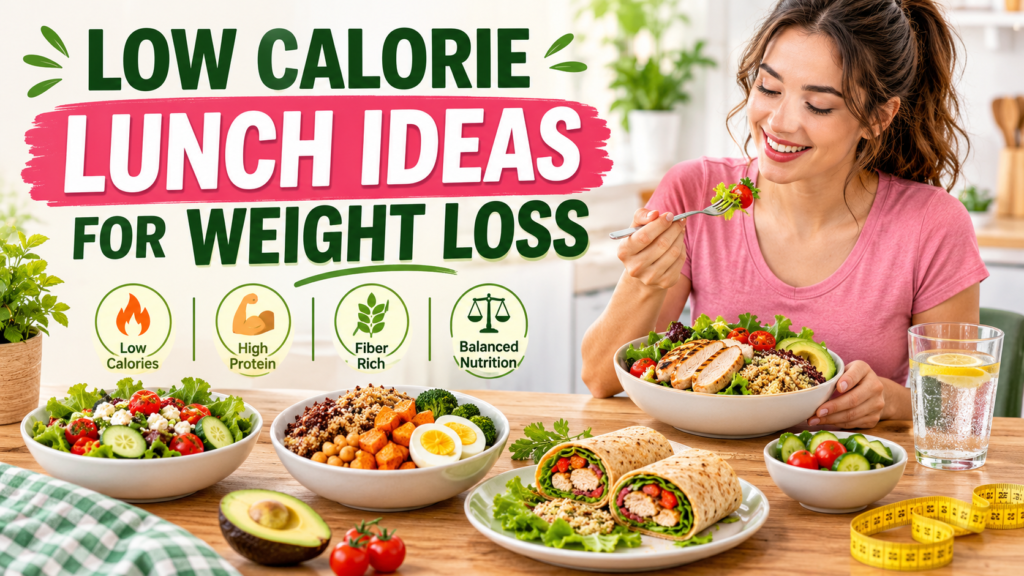
Quick Answer: Low calorie lunch ideas for weight loss work best when each lunch stays under 400 calories and combines lean protein with fiber-rich vegetables and whole grains. A 350-calorie lunch with 20 to 30 grams of protein keeps you full until dinner and protects your daily 300 to 500 calorie deficit.
Table of Contents
Low calorie lunch ideas for weight loss matter more than most people think, because lunch is the meal that decides how the afternoon goes. A heavy lunch leads to a slow afternoon, a craving for something sweet at 3 p.m., and a large snack that quietly erases the morning’s good work. A lunch that is too small leads to the same result from the other direction: hunger by 4 p.m., and a large dinner that erases the deficit anyway.
The sweet spot is a lunch of 300 to 400 calories with enough protein and fiber to keep you full for four or five hours. That is enough food to feel satisfied, small enough to protect your calorie deficit, and practical enough to pack for work. Every recipe in this article fits that target, lists calories and protein per serving, and is designed to be eaten at a desk, in a car, or at home without a microwave drama.
If you are building a full weight-loss routine, our guide on weight loss tips for women explains how lunch fits into a daily deficit of 300 to 500 calories, which supports steady loss of about half a pound to one pound a week.
Why Lunch Makes or Breaks Weight Loss
Lunch sits in the middle of the day, which makes it the most vulnerable meal. Breakfast is usually eaten at home, and dinner is usually cooked at home, but lunch happens at work, on the move, or wherever the day takes you. That is why it is the meal most often bought rather than made, and bought lunches are usually the problem: a sandwich, a drink, and a snack from a shop can easily reach 800 calories without feeling like a large meal.
Protein and fiber are what make a packed lunch work. Protein keeps you full and protects muscle while you lose weight, and fiber slows digestion so the meal lasts. A lunch with 20 to 30 grams of protein and at least 5 grams of fiber will carry most people comfortably from noon to dinner. A lunch of white bread and crisps, with almost no protein or fiber, will not, no matter how many calories it contains.
There is also an energy reason to keep lunch moderate. A very large lunch, especially one high in refined carbohydrates and fat, often causes an afternoon energy dip as blood sugar rises and then falls. A lighter lunch with protein, vegetables, and whole grains gives steadier energy, which means better focus at work and less desire for a sugary snack at 3 p.m. Lunch is not just about calories; it is about how the rest of your day feels.
The good news is that a work lunch does not need to be boring or complicated. The ten recipes below use ordinary ingredients, most take ten minutes or less, and several can be made in a batch on Sunday and packed all week. The goal is a lunch you look forward to, not a lunch you endure.
Low Calorie Lunch Ideas for Weight Loss: The 400-Calorie Lunch Formula
Build every lunch from the same four parts, and the calories take care of themselves.
- Lean protein (20 to 30 grams): chicken, tuna, eggs, cottage cheese, beans, lentils, or tofu. This is the anchor of the meal.
- Vegetables (at least 2 cups): salad leaves, cucumber, tomato, carrots, peppers, or roasted vegetables. Volume without calories.
- Whole grain or starchy base (1 small portion): one slice of whole-grain bread, 1/2 cup of cooked rice, 1/2 cup of cooked pasta, or one small potato.
- Flavor and healthy fat (1 teaspoon to 1 tablespoon): olive oil, lemon, herbs, mustard, or a small amount of nuts. Flavor makes the meal satisfying, but measure the fat.
Water is the best lunch drink. A glass of water before lunch helps you judge hunger honestly, and many people mistake thirst for hunger in the afternoon. Keep a bottle at your desk and sip through the day rather than waiting until you feel thirsty.
Lunch nutrition at a glance
| Lunch | Calories | Protein | Prep Time |
|---|---|---|---|
| Chicken and Vegetable Soup | 320 kcal | 28 g | 25 min |
| Tuna and White Bean Salad | 350 kcal | 30 g | 10 min |
| Egg and Avocado Toast | 360 kcal | 18 g | 10 min |
| Chickpea and Feta Salad Bowl | 380 kcal | 20 g | 10 min |
| Turkey and Vegetable Wrap | 370 kcal | 30 g | 10 min |
| Lentil and Roasted Vegetable Bowl | 390 kcal | 22 g | 20 min |
| Cottage Cheese and Fruit Plate | 310 kcal | 28 g | 5 min |
| Asian Noodle and Chicken Salad | 380 kcal | 29 g | 15 min |
| Stuffed Peppers with Rice and Beans | 390 kcal | 19 g | 25 min |
| Greek Yogurt Chicken Salad | 340 kcal | 32 g | 10 min |
Calorie and protein figures are estimates based on standard serving sizes. Every lunch stays under 400 calories while delivering real protein, which is the combination that keeps you full until dinner.
10 Low Calorie Lunch Ideas for Weight Loss Under 400 Calories
1. Chicken and Vegetable Soup (320 kcal, 28 g protein)
Simmer diced chicken breast with carrots, celery, onion, and green beans in a light broth for 20 minutes, and season with herbs and lemon. Soup is one of the best weight-loss lunches because it is mostly water and vegetables, so a large bowl feels generous at only 320 calories. Make a large pot on Sunday and freeze it in single portions, then reheat one each morning and take it to work in a flask. Add a small whole-grain roll on cold days if you want more staying power, and keep the salt moderate by using herbs and lemon for flavor rather than extra stock cubes. Soup also travels better than salad, because it does not wilt and it tastes just as good reheated.
2. Tuna and White Bean Salad (350 kcal, 30 g protein)
Mix a tin of tuna with 1/2 cup of white beans, diced tomato, cucumber, red onion, and parsley, and dress with lemon juice and a teaspoon of olive oil. This salad needs no cooking, takes ten minutes, and delivers 30 grams of protein, the joint highest in this collection. The beans add fiber that keeps you full for hours, and the lemon and herbs give it a fresh flavor that improves after an hour in the fridge. Pack it in a sealed container with a separate small bag of salad leaves, and mix them at lunchtime so the leaves stay crisp. If you prefer, swap the tuna for tinned salmon or chickpeas, both of which give a similar protein count.
3. Egg and Avocado Toast (360 kcal, 18 g protein)
Toast one slice of whole-grain bread, top with 1/4 mashed avocado, one sliced boiled egg, and a pinch of chili flakes. This lunch is simple, fast, and satisfying, and it works well for days when you eat at home. The avocado supplies healthy fats that make the meal feel rich, so measure a quarter rather than a half, because avocado is calorie-dense. Add a side salad of tomato and cucumber to add volume without adding many calories, and drink water with the meal. If you want more protein, add a second egg white or a small portion of cottage cheese on the side, which lifts the total to about 24 grams.
4. Chickpea and Feta Salad Bowl (380 kcal, 20 g protein)
Toss 1 cup of chickpeas with diced cucumber, tomato, red onion, and peppers, crumble over 30 grams of feta cheese, and dress with lemon and a teaspoon of olive oil. Chickpeas are high in fiber and plant protein, and the feta adds a salty flavor that makes the salad feel complete. This bowl keeps well in the fridge for two days, so make a double batch and eat it twice in the week. It is a good lunch for vegetarians and for anyone who wants a break from meat. Serve it with a small piece of whole-grain bread if you want more carbohydrates, or eat it on its own with a piece of fruit for dessert. For more salads built as full meals, see our healthy salads for weight loss.
5. Turkey and Vegetable Wrap (370 kcal, 30 g protein)
Spread a whole-grain wrap with 2 tablespoons of plain yogurt, layer with sliced turkey, lettuce, tomato, and cucumber, and roll it tightly. Wraps are the most portable lunch in this collection: they fit in a bag, need no cutlery, and can be eaten at a desk or in a car. Use lean turkey or chicken rather than processed sandwich meat, which is higher in salt and lower in protein for the same calories. A yogurt spread replaces mayonnaise and saves about 80 calories while adding protein. Wrap it in foil in the morning and it will still be fresh at noon. Add a piece of fruit for a complete lunch that stays under 450 calories in total.
6. Lentil and Roasted Vegetable Bowl (390 kcal, 22 g protein)
Roast a tray of sweet potatoes, carrots, and zucchini with olive oil and cumin, then serve over 1 cup of cooked lentils with a spoonful of plain yogurt. Lentils are one of the cheapest and most filling foods you can eat, and roasted vegetables add sweetness and volume for very few calories. This bowl is best eaten warm, so reheat it in the microwave at work, or eat it at room temperature if no microwave is available. Make the lentils and vegetables in a batch on Sunday and assemble a bowl each morning in two minutes. The cumin and yogurt give it a warm, satisfying flavor that makes a meat-free lunch feel complete rather than like a compromise.
7. Cottage Cheese and Fruit Plate (310 kcal, 28 g protein)
Serve 1 cup of cottage cheese with a sliced apple, a small handful of walnuts, and a sprinkle of cinnamon. This is the fastest lunch in the collection at five minutes, and it works well on days when you have no time to cook. Cottage cheese supplies 28 grams of protein, the apple adds fiber and natural sweetness, and the walnuts add healthy fats and crunch. Keep the nuts to one tablespoon, because they are calorie-dense. This lunch suits hot days and light appetites, and it is a good option if you ate a larger breakfast and want something smaller at midday. Pack it in two small containers so the fruit stays crisp until lunchtime.
8. Asian Noodle and Chicken Salad (380 kcal, 29 g protein)
Toss cooked noodles with shredded chicken, grated carrot, sliced peppers, and spring onions, and dress with soy sauce, lime juice, ginger, and a teaspoon of sesame oil. This salad is best eaten cold or at room temperature, which makes it ideal for work lunches with no microwave. The chicken supplies most of the protein, the vegetables add crunch and fiber, and the dressing gives it a bright flavor. Keep the noodles to one small portion, about half a cup cooked, and let the vegetables and chicken fill the rest of the bowl. Make a double batch in the evening and pack half for tomorrow, because the flavor improves overnight as the dressing soaks in.
9. Stuffed Peppers with Rice and Beans (390 kcal, 19 g protein)
Fill two halved bell peppers with a mix of cooked rice, black beans, diced tomato, and herbs, top with a little grated cheese, and bake for 20 minutes. Stuffed peppers look impressive but take very little effort, and they reheat well in the microwave. The beans add protein and fiber, the rice adds staying power, and the pepper itself is mostly water and fiber, so the plate looks generous for under 400 calories. This lunch is a good choice for batch cooking: make four peppers on Sunday and eat them across the week. If you want more protein, add a boiled egg on the side, which lifts the total to about 25 grams without much extra effort.
10. Greek Yogurt Chicken Salad (340 kcal, 32 g protein)
Mix diced cooked chicken with 1/2 cup of plain Greek yogurt, diced celery, grapes cut in half, and a squeeze of lemon, then serve over salad leaves with a small whole-grain roll. Replacing mayonnaise with Greek yogurt is the single easiest calorie saving in this article: it cuts about 150 calories and adds protein at the same time. This salad has the highest protein in the collection at 32 grams, and it takes ten minutes if the chicken is already cooked. Use leftover chicken from last night’s dinner to make it even faster, and pack the salad leaves separately so they stay crisp. A few grapes add sweetness and make the salad feel like more than a plain chicken lunch.
Best Lunch Choices vs. Choices to Limit
- Best proteins: chicken, tuna, eggs, cottage cheese, Greek yogurt, beans, lentils, tofu, turkey
- Best bases: salad leaves, soup, whole-grain wraps, small portions of rice or noodles
- Best vegetables: cucumber, tomato, carrots, peppers, broccoli, green beans, spinach
- Best dressings: lemon, vinegar, mustard, yogurt, herbs, a teaspoon of olive oil
- Best drinks: water, sparkling water, unsweetened tea
- Limit mayonnaise and creamy dressings: one tablespoon can add 90 calories
- Limit large white-bread sandwiches: two thick slices plus filling can pass 600 calories
- Limit crisps and sweet snacks with lunch: they add calories without protein or fiber
- Limit sugary drinks: a sweet drink can add 150 calories to an otherwise light lunch
- Limit skipping lunch: a missed lunch usually becomes a large snack and a larger dinner
Practical Tips: Meal Prep, Packing, and Eating at Work
A Sunday prep session of one hour can cover the whole working week. Cook a large pot of soup and freeze it in portions, grill several chicken breasts and slice them for salads and wraps, cook a batch of lentils and rice, and chop vegetables for salads. Store each part in a separate container, and assemble a different lunch each morning in five minutes. Variety comes from mixing the same parts in different ways, not from cooking a new recipe every night.
Packing matters as much as cooking. Use containers with separate compartments so salad leaves stay crisp, dressing stays separate until lunchtime, and hot food stays hot in a flask. Pack your lunch the night before, not in the morning rush, because a lunch packed at night is a lunch that actually gets taken to work. Keep a backup at work for days when you forget: a tin of tuna, a pack of oatcakes, and a piece of fruit in your desk drawer can become a 350-calorie lunch in two minutes.
Eat lunch away from your desk if you can. A ten-minute walk after lunch helps digestion and blood sugar, and eating without a screen helps you notice fullness. If you must eat at your desk, close the laptop for ten minutes and eat slowly. A lunch eaten mindfully feels more satisfying than the same lunch eaten while working, and that satisfaction is what stops the 3 p.m. snack run. For a full-week system that builds on these lunches, our guide to meal prep for the week shows how one prep session covers five days of meals.
Frequently Asked Questions
How many calories should lunch have for weight loss?
A lunch of 300 to 400 calories works well for most women losing weight, with 20 to 30 grams of protein and plenty of vegetables. That size keeps you full until dinner without using up too much of your daily calorie budget. If you are very active or taller than average, a 450-calorie lunch with more protein may suit you better, but the principle stays the same: protein plus fiber plus vegetables.
Can I eat a sandwich for weight loss?
Yes, if you build it the right way. Use whole-grain bread, lean protein such as chicken, tuna, or eggs, plenty of salad, and a yogurt or mustard spread instead of mayonnaise. One sandwich with a side salad and a piece of fruit is a complete lunch under 450 calories. The problem is not sandwiches; it is large white-bread sandwiches with fatty fillings, crisps, and a sweet drink alongside.
What is the best lunch to take to work without a microwave?
Salads, wraps, and cold noodle dishes travel best without a microwave. The tuna and bean salad, the turkey wrap, and the Asian noodle salad in this article are all designed to be eaten cold. Pack dressing separately so nothing goes soggy, and use an ice pack in summer to keep the lunch fresh until noon.
Why do I always feel hungry at 3 p.m.?
A 3 p.m. craving usually means lunch was too low in protein or fiber, or too high in refined carbohydrates. A lunch of white bread and crisps digests quickly and leaves you hungry within two hours. A lunch with 20 to 30 grams of protein, fiber, and vegetables lasts much longer. If you still feel hungry, a small planned snack, such as an apple with a handful of nuts or a pot of yogurt, is better than an unplanned large snack.
Can I meal prep lunches for the whole week?
Yes. Soups, lentil bowls, and stuffed peppers keep for four to five days in the fridge, and several freeze well for longer. Salads are best prepped as parts, with dressing packed separately, so they stay fresh. Cook on Sunday, pack lunches on Sunday night, and your working week is sorted. Avoid prepping fish for more than two days, because the flavor and texture decline quickly.
Is skipping lunch a good way to lose weight faster?
Usually not. Skipping lunch often leads to a large snack in the afternoon and a larger dinner, which cancels out the calories saved. It can also leave you tired and less able to focus at work. A planned 350-calorie lunch is almost always a better choice than no lunch followed by unplanned eating. If you prefer a smaller lunch, eat a 250-calorie soup or salad and add a small protein snack in the afternoon.
Final Verdict
Low calorie lunch ideas for weight loss come down to a simple formula: under 400 calories, 20 to 30 grams of protein, plenty of vegetables, and a small whole-grain portion. Start with the soup on Sunday, pack the tuna and bean salad for Monday, and keep a wrap ready for the busiest day of the week. A planned lunch protects your calorie deficit, steadies your afternoon energy, and stops the 3 p.m. snack run that quietly undoes a good morning. Prepare on Sunday, pack the night before, and let lunch work for your weight-loss plan instead of against it. For more practical, research-based weight loss guides, visit the HealthSpots homepage.
Medical Disclaimer
This article is for general information only and is not medical advice. It does not replace guidance from your doctor or a registered dietitian. If you have diabetes, kidney disease, thyroid disease, or any other medical condition, or if you are pregnant or breastfeeding, talk to your healthcare provider before changing your diet. Do not follow a diet below 1,200 calories a day without medical supervision.
Sources
- Harvard T.H. Chan School of Public Health — The Nutrition Source: Healthy Eating Plate
- Centers for Disease Control and Prevention — Healthy weight, nutrition, and physical activity
- National Institutes of Health — Protein intake and satiety research