
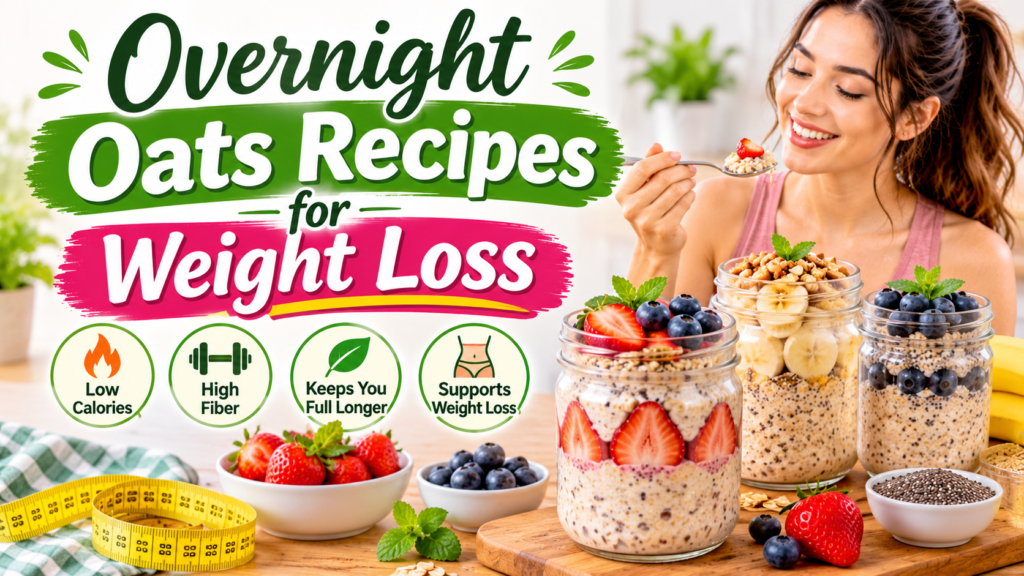
Quick Answer: Overnight oats recipes for weight loss work because they are portion-controlled, high in fiber, and ready before your morning starts. A good jar has 300–400 calories and 20–30 g of protein, keeps you full for hours, and fits a modest 300–500 calorie daily deficit. Prep five jars on Sunday, grab one each morning, and breakfast takes care of itself.
Table of Contents
Breakfast is where many weight-loss plans quietly fall apart. You wake up hungry, you are in a rush, and the easiest option is a sugary cereal, a pastry from the coffee shop, or nothing at all — and then a mid-morning crash sends you straight to the snack drawer. Overnight oats recipes for weight loss solve this problem at its root. They turn breakfast into a decision you make once, on a calm Sunday evening, instead of a decision you make five times a week while half asleep and hungry.
The idea is beautifully simple. You combine oats, milk, and a few good toppings in a jar, put it in the fridge overnight, and by morning the oats have softened into a thick, creamy porridge that needs no cooking at all. You can eat it cold straight from the fridge, or warm it for two minutes if you prefer it hot. There is no pan to wash and no excuse to skip breakfast. For busy women who want a steady loss of about 0.5–1 lb/week, that kind of reliability matters more than any single superfood.
But not every jar of overnight oats helps you lose weight. A jar loaded with honey, sweetened peanut butter, and granola can easily pass 700 calories, while a well-built jar lands at 300–400 calories with 20–30 g of protein and keeps you full until lunch. The difference is not the oats — it is the ratios, the toppings, and the portions. This guide gives you the base formula, the best ingredient choices, and seven complete recipes you can rotate all week.
Overnight Oats Recipes for Weight Loss: The Base Formula and Ratios
Every good jar starts with the same skeleton, and once you learn it you can build your own recipes without a recipe card. The classic ratio is one part oats to one part liquid, plus a protein source and a flavor layer. In practical terms, that means half a cup (40 g) of rolled oats, half a cup (120 ml) of milk, and two to three tablespoons of Greek yogurt. That base alone gives you roughly 200 calories, 12 g of protein, and 5 g of fiber.
The oats are the foundation. Rolled oats, also called old-fashioned oats, are the best choice for overnight oats. They soften overnight into a creamy texture while keeping a pleasant chew. Steel-cut oats stay too hard and gritty unless you cook them first, so they are not suitable for the no-cook method. Instant oats turn to mush and have a higher glycemic impact, which means they digest faster and leave you hungry sooner. Always measure your oats: it is easy to pour a generous cup into a jar without noticing, and that extra half cup adds about 150 calories before you have added a single topping.
The liquid sets the creaminess. Unsweetened milk of any kind works, but the choice affects both calories and protein. Skim or 1% dairy milk gives you about 8 g of protein per cup for roughly 90–100 calories. Unsweetened soy milk is the best plant option because it has about 7–8 g of protein per cup for roughly 80 calories. Unsweetened almond milk is very low in calories — about 30–40 per cup — but adds almost no protein, so you need to make that up elsewhere. Avoid sweetened milks entirely: a cup of sweetened almond or oat milk can add 7–10 g of sugar and 30–50 extra calories for no extra nutrition.
Chia seeds and flaxseeds are small but powerful additions. One tablespoon of chia seeds adds about 60 calories and 5 g of fiber, and it thickens the oats beautifully as it absorbs liquid overnight. These are worth including, but they are also the easiest place to overdo it: two or three spoonfuls of seeds, nuts, and nut butter together can quietly add 250 calories to a jar. Measure them with a real tablespoon, and pick one or two — not all four — per jar.
| Base Ingredient | Amount per Jar | Calories | Protein | Why It Works |
|---|---|---|---|---|
| Rolled oats | 1/2 cup (40 g) | About 150 | 5 g | Slow-digesting fiber, keeps you full |
| Milk (skim or unsweetened soy) | 1/2 cup (120 ml) | About 40–50 | 4 g | Creaminess without excess calories |
| Plain non-fat Greek yogurt | 1/4–1/3 cup (60–80 g) | About 40–60 | 7–9 g | Protein and thick, creamy texture |
| Chia seeds | 1 tablespoon (12 g) | About 60 | 2 g | Fiber and omega-3s, thickens the jar |
| Berries or half a banana | 1/2–3/4 cup | About 30–50 | 0–1 g | Natural sweetness, vitamins, fiber |
| Protein powder (optional) | 1/2 scoop | About 60 | 10–12 g | Pushes the jar to 25–30 g protein |
| Typical finished jar | 1 serving | 300–400 | 20–30 g | Filling, balanced, portable |
That table is the whole system in one place. If your jar lands between 300 and 400 calories with 20–30 g of protein and at least 6 g of fiber, it will keep most women full for three to four hours. That fullness is the real weight-loss mechanism: a breakfast that keeps you satisfied until lunch removes the mid-morning snack and the oversized lunch that follows a morning of hunger.
Best Oats and Milk Choices for Weight Loss
Choosing the right oats and milk is a small decision with a large effect on the jar. Rolled oats are a whole grain, and their soluble fiber — beta-glucan — slows digestion and feeds the friendly bacteria in your gut. A diet rich in this kind of fiber supports digestion and steady energy, which is one more reason oats pair so well with the foods in this guide to the best foods for gut health and digestion.
Steel-cut oats are nutritionally excellent but texturally wrong for the no-cook method. They need heat and time to soften, and even after a night in the fridge they stay chewy in an unpleasant way. If you love steel-cut oats, cook a batch and portion it into jars instead — that is a different method, and it works well, but it is not overnight oats. Instant oats are the opposite problem: they absorb liquid too fast, lose their texture, and digest more quickly, which means they keep you full for less time. Save instant oats for emergencies and use rolled oats as your standard.
For milk, the ranking for weight loss is simple. Unsweetened soy milk is the best plant milk because it matches dairy milk on protein at a similar calorie count. Skim or 1% dairy milk is equally good if you eat dairy. Unsweetened almond milk is fine if you add enough protein elsewhere — for example with Greek yogurt and protein powder — because on its own it contributes almost no protein. Oat milk tastes wonderful but is the weakest choice for weight loss: it is higher in calories and carbohydrates than almond or soy milk, often contains added sugar even in “original” versions, and adds almost no protein. Canned coconut milk is extremely high in saturated fat and calories and should never go into a weight-loss jar.
Sweeteners to Avoid — and What to Use Instead
Sweetener is where most overnight oats jars go wrong. The oats themselves are almost neutral in flavor, so there is a temptation to add a generous drizzle of honey, maple syrup, or agave. The problem is the math: one tablespoon of honey adds about 64 calories and 17 g of sugar, and most people pour closer to two tablespoons without measuring. That single pour can push a 320-calorie jar to 450 calories or more, and the sugar makes you hungrier an hour later rather than more satisfied.
The better approach is to let fruit do the sweetening. Half a mashed banana stirred into the oats adds natural sweetness, potassium, and fiber for about 50 calories. A handful of berries adds color, flavor, and antioxidants for 30–40 calories. Vanilla extract — half a teaspoon — adds a surprising amount of flavor for zero calories, and cinnamon does the same while making the oats taste sweeter than they are.
If you genuinely need extra sweetness, use a small amount and measure it. One teaspoon of honey or maple syrup — not a tablespoon — adds about 20 calories and is usually enough when fruit and vanilla are already in the jar. What you should avoid entirely are the sweetened toppings that look healthy but are not: granola, sweetened coconut flakes, chocolate chips, and flavored nut butters. A quarter cup of granola alone can add 120–140 calories and 6–8 g of sugar, and it is usually the first thing people sprinkle on without weighing.
7 Overnight Oats Recipes for Weight Loss
These seven recipes are designed to be rotated through the week, so you never get bored of the same jar. Each one follows the same base formula — half a cup of rolled oats, half a cup of milk, Greek yogurt, and chia seeds — and then takes a different flavor direction. The calorie and protein figures are approximate per serving and assume the ingredients are measured as listed. Prep them in mason jars or any container with a tight lid, stir well, seal, and refrigerate overnight. In the morning, stir once more, add any crunchy topping fresh, and eat.
1. Berry Almond Overnight Oats
This is the classic, and it is the classic for a reason. Mixed berries bring color, fiber, and natural sweetness, while almond butter adds richness and healthy fats. It tastes like a treat and keeps you full for hours.
- 1/2 cup (40 g) rolled oats
- 1/2 cup (120 ml) unsweetened almond milk
- 1/3 cup (80 g) plain non-fat Greek yogurt
- 1 tablespoon chia seeds
- 1/2 teaspoon vanilla extract
- 3/4 cup mixed berries (blueberries, raspberries, strawberries)
- 1 tablespoon natural almond butter
- 1 teaspoon sliced almonds, to top in the morning
Stir the oats, almond milk, yogurt, chia seeds, and vanilla together in a jar until everything is combined. Fold in half the berries, then top with the remaining berries and the almond butter. Seal and refrigerate overnight. In the morning, sprinkle the sliced almonds on top. Approximate nutrition per serving: 340 calories, 17 g protein, 9 g fiber.
2. Peanut Butter Banana Overnight Oats
Peanut butter and banana is a combination most women already love, and it works beautifully in overnight oats. The banana sweetens the jar naturally, the peanut butter adds staying power, and a pinch of cinnamon makes the whole thing taste like dessert. The key is measuring the peanut butter — one tablespoon, not a heaped spoon from the jar.
- 1/2 cup (40 g) rolled oats
- 1/2 cup (120 ml) skim milk
- 1/3 cup (80 g) plain non-fat Greek yogurt
- 1 tablespoon chia seeds
- 1/2 small banana, mashed
- 1 tablespoon natural peanut butter (no added sugar)
- 1/2 teaspoon cinnamon
- A few banana slices, to top in the morning
Mash the banana in the jar first, then add the oats, milk, yogurt, chia seeds, peanut butter, and cinnamon. Stir until the peanut butter is evenly distributed — it takes a little effort, but it is worth it. Seal and refrigerate overnight, then top with fresh banana slices in the morning. Approximate nutrition per serving: 370 calories, 18 g protein, 8 g fiber.
3. Chocolate Protein Overnight Oats
This is the jar for women who want breakfast to taste like chocolate and still hit their protein target. Unsweetened cocoa powder gives a deep chocolate flavor for almost no calories, and a scoop of protein powder pushes the jar well past 25 g of protein. It is the best option in this list for a post-workout breakfast. For more ideas on building protein-rich mornings, see these high protein breakfast ideas for weight loss.
- 1/2 cup (40 g) rolled oats
- 1/2 cup (120 ml) unsweetened soy milk
- 1/3 cup (80 g) plain non-fat Greek yogurt
- 1 tablespoon chia seeds
- 1 tablespoon unsweetened cocoa powder
- 1/2 scoop (about 15 g) chocolate or vanilla protein powder
- 1/2 teaspoon vanilla extract
- 1/2 cup raspberries, to top in the morning
Whisk the cocoa powder and protein powder into the milk first, so they dissolve without clumps, then stir in the oats, yogurt, chia seeds, and vanilla. Seal and refrigerate overnight. In the morning, stir well and top with raspberries. If the jar is too thick, add a splash of milk. Approximate nutrition per serving: 360 calories, 28 g protein, 10 g fiber.
4. Apple Cinnamon Overnight Oats
Apple cinnamon overnight oats taste like apple pie filling, and they are a perfect autumn and winter breakfast. The diced apple softens slightly overnight while staying crisp enough to give the jar texture, and cinnamon makes the whole jar taste sweeter than it is.
- 1/2 cup (40 g) rolled oats
- 1/2 cup (120 ml) skim milk
- 1/3 cup (80 g) plain non-fat Greek yogurt
- 1 tablespoon chia seeds
- 1/2 medium apple, diced small
- 1/2 teaspoon cinnamon
- 1/4 teaspoon nutmeg
- 1 tablespoon chopped walnuts, to top in the morning
Combine the oats, milk, yogurt, chia seeds, diced apple, cinnamon, and nutmeg in a jar and stir well. Seal and refrigerate overnight. In the morning, top with the chopped walnuts — adding them fresh keeps them crunchy instead of soggy. Approximate nutrition per serving: 330 calories, 15 g protein, 8 g fiber.
5. Mango Coconut Overnight Oats
This jar brings a tropical flavor to your morning without the sugar and fat that usually come with it. Fresh or frozen mango gives natural sweetness and vitamin C, while a small amount of unsweetened shredded coconut adds flavor without the calorie load of canned coconut milk.
- 1/2 cup (40 g) rolled oats
- 1/2 cup (120 ml) unsweetened coconut milk (carton, not canned)
- 1/3 cup (80 g) plain non-fat Greek yogurt
- 1 tablespoon chia seeds
- 3/4 cup diced mango (fresh or thawed frozen)
- 1 tablespoon unsweetened shredded coconut
- 1/2 teaspoon vanilla extract
- 1 teaspoon lime zest (optional)
Stir the oats, coconut milk, yogurt, chia seeds, shredded coconut, and vanilla together in a jar. Fold in half the mango and layer the rest on top. Seal and refrigerate overnight. Approximate nutrition per serving: 340 calories, 14 g protein, 8 g fiber. To push the protein higher, swap the carton coconut milk for soy milk and add half a scoop of vanilla protein powder.
6. Blueberry Lemon Overnight Oats
Blueberries and lemon are a bright, fresh combination that feels light even though the jar is filling. Blueberries are one of the most nutrient-dense fruits you can add to breakfast — rich in antioxidants and fiber for very few calories — and lemon zest gives the oats a clean flavor that wakes up your taste buds in the morning.
- 1/2 cup (40 g) rolled oats
- 1/2 cup (120 ml) skim milk
- 1/3 cup (80 g) plain non-fat Greek yogurt
- 1 tablespoon chia seeds
- 3/4 cup blueberries (fresh or frozen)
- 1 teaspoon lemon zest
- 1/2 teaspoon vanilla extract
- 1 tablespoon pumpkin seeds, to top in the morning
Combine the oats, milk, yogurt, chia seeds, lemon zest, and vanilla in a jar and stir well. Fold in the blueberries — if you use frozen berries, they will thaw overnight and turn the oats purple. Seal and refrigerate overnight, then top with pumpkin seeds in the morning. Approximate nutrition per serving: 320 calories, 15 g protein, 9 g fiber.
7. Carrot Cake Overnight Oats
This is the most creative jar on the list, and it is the one that surprises people most. Finely grated carrot softens overnight and adds natural sweetness, fiber, and vitamin A, while cinnamon, nutmeg, and vanilla recreate the flavor of carrot cake.
- 1/2 cup (40 g) rolled oats
- 1/2 cup (120 ml) skim milk
- 1/3 cup (80 g) plain non-fat Greek yogurt
- 1 tablespoon chia seeds
- 1/2 cup finely grated carrot
- 2 tablespoons raisins
- 1/2 teaspoon cinnamon
- 1/4 teaspoon nutmeg
- 1 tablespoon chopped pecans, to top in the morning
Stir the oats, milk, yogurt, chia seeds, grated carrot, raisins, cinnamon, and nutmeg together in a jar. The carrot needs to be grated finely — use the small holes of a box grater — or it will stay too crunchy. Seal and refrigerate overnight, then top with chopped pecans. Approximate nutrition per serving: 350 calories, 15 g protein, 9 g fiber.
| Recipe | Calories | Protein | Fiber | Best For |
|---|---|---|---|---|
| Berry Almond | About 340 | 17 g | 9 g | Everyday favorite, high fiber |
| Peanut Butter Banana | About 370 | 18 g | 8 g | Rich flavor, very filling |
| Chocolate Protein | About 360 | 28 g | 10 g | Highest protein, post-workout |
| Apple Cinnamon | About 330 | 15 g | 8 g | Budget-friendly, autumn flavor |
| Mango Coconut | About 340 | 14 g | 8 g | Summer, tropical change |
| Blueberry Lemon | About 320 | 15 g | 9 g | Lightest jar, antioxidant-rich |
| Carrot Cake | About 350 | 15 g | 9 g | Vegetables at breakfast, dessert flavor |
Make-Ahead and Storage: How Long Do Overnight Oats Last?
Overnight oats are a meal-prep food by design, and they reward a small amount of Sunday planning. A jar needs at least 6 hours in the fridge for the oats and chia seeds to absorb the liquid fully, but 8 to 12 hours gives the best texture. Most jars stay fresh and safe in the fridge for up to 5 days, which means you can prepare five jars on Sunday evening and eat one each weekday morning. Store them in containers with tight-fitting lids, keep them at the back of the fridge where the temperature is most stable, and always use a clean spoon. Knowing breakfast is already handled also makes the whole morning calmer — and if mornings are a stressful part of your day, this guide on how to reduce stress and anxiety naturally has practical techniques that pair well with a calmer routine.
There are a few practical rules that keep your jars tasting good all week. First, keep crunchy toppings separate. Nuts, seeds, and sliced fruit added the night before will go soft by morning, so store them separately and add them just before eating. Second, keep the fruit in mind: bananas brown quickly, so slice them fresh in the morning. Berries, mango, and diced apple hold up well for the full five days. Third, check the jar before eating it: if it smells sour or has visible mold, throw it away.
High-Protein Variations: Reaching 30–40 g of Protein Per Meal
Protein is the nutrient that makes the biggest difference to how full you feel after breakfast. The general target in this guide is 30–40 g of protein per meal, and a basic overnight oats jar gives you 15–18 g — a good start, but not the full target. You can either boost the jar itself, or pair it with a small protein side and reach the target easily.
The simplest boost is protein powder. Half a scoop stirred into the milk adds about 10–12 g of protein for roughly 60 calories, and a full scoop adds 20–25 g for about 120 calories. Vanilla protein powder blends into almost any flavor, while chocolate powder turns a plain jar into the chocolate recipe above. Choose a powder with no added sugar and a short ingredient list, and whisk it into the milk before adding the oats so it dissolves evenly.
Pairing is the other route. A jar with 15 g of protein plus a boiled egg (about 6 g) and a small handful of nuts gets you close to 25 g, and a jar plus a cup of Greek yogurt on the side takes you past 30 g. A morning that combines a protein-rich breakfast with gentle movement works even better, and this guide to yoga for weight loss for beginners is a good place to start if you want a low-impact routine to go with your new breakfast habit.
Common Mistakes That Turn Oats Into a Calorie Bomb
Overnight oats are a healthy food, but they are also a food that is easy to overload. These are the mistakes that quietly turn a 330-calorie breakfast into a 650-calorie one — and the fixes are all simple. Remember that no single food can target belly fat on its own; what a good breakfast does is make the rest of the day easier, and for a fuller picture of how food choices and daily habits work together on belly fat, see this guide on how to lose belly fat naturally for women.
- Pouring oats without measuring: A generous scoop can be a full cup instead of half a cup, adding about 150 calories before any topping. Always use a measuring cup.
- Using sweetened milk or yogurt: Sweetened almond milk, flavored yogurt, and sweetened oat milk add sugar and calories without adding nutrition. Buy plain and unsweetened, and let fruit do the sweetening.
- Drowning the jar in honey or maple syrup: Two tablespoons of honey add about 128 calories and 34 g of sugar. One teaspoon is usually enough — and often you need none at all.
- Adding every topping at once: Nut butter plus nuts plus seeds plus granola plus coconut can add 300 calories of toppings to a 200-calorie base. Pick one or two toppings per jar.
- Using instant oats: Instant oats digest faster and keep you full for less time than rolled oats, so you get hungry sooner and eat more later. Use rolled oats as your standard.
- Skipping protein: A jar of oats, milk, and fruit alone has only about 10–12 g of protein. Without Greek yogurt or protein powder, you will be hungry again within two hours.
- Treating the jar as a dessert: Chocolate chips, caramel sauce, sweetened coconut, and crushed cookies belong in dessert, not in a weight-loss breakfast. Keep the jar built on whole foods.
- Eating two jars: A jar is one serving. If you are still hungry after finishing one, drink a glass of water, wait 15 minutes, and reassess — most of the time the hunger passes as the fiber and protein take effect.
Frequently Asked Questions
Are overnight oats good for weight loss?
Yes, when they are built correctly. A jar of rolled oats, unsweetened milk, Greek yogurt, and fruit has 300–400 calories, 15–30 g of protein, and 8–10 g of fiber, which keeps you full for three to four hours. That fullness helps you stay inside a modest 300–500 kcal/day deficit without feeling deprived. A jar overloaded with honey, granola, and sweetened nut butter can pass 650 calories and will not help weight loss at all.
How many calories are in overnight oats?
A well-built jar has 300–400 calories. The base of half a cup of oats, half a cup of milk, Greek yogurt, and chia seeds is about 250–300 calories, and fruit adds another 30–50. The recipes in this guide range from about 320 to 370 calories per serving. Calories climb fast with added sweeteners and toppings: two tablespoons of honey add about 128 calories, and a quarter cup of granola adds about 130.
Can I eat overnight oats every day?
Yes, you can eat them every day, and many women do. Oats are a whole grain rich in soluble fiber, and eating them daily is associated with better cholesterol levels and steadier digestion. The key is variety: rotate the recipes in this guide so you get different fruits, nuts, and flavors across the week instead of the same jar every morning.
Do overnight oats need to be refrigerated?
Yes, always. Overnight oats contain milk and yogurt, so they must stay refrigerated from the moment you assemble them until you eat them. Keep them in a sealed container in the fridge, eat them within 5 days, and throw away any jar that smells sharply sour or shows mold. Never leave a jar at room temperature for more than two hours.
Can I warm up overnight oats?
Yes. Many women prefer them warm, especially in winter. Transfer the oats to a microwave-safe bowl and heat for 60–90 seconds, stirring halfway through, and add a splash of milk if they are too thick. You can also warm them gently in a small pan on the stove. Add crunchy toppings such as nuts and seeds after heating so they stay crisp, and add fresh fruit after heating so it keeps its texture.
Are overnight oats better than cooked oatmeal for weight loss?
Nutritionally, they are very similar — both are made from oats, and both give you fiber and slow-digesting energy. The difference is practical. Overnight oats are portioned in advance, which makes overeating harder, and they are ready to eat with no morning effort, which makes skipping breakfast less likely. Cooked oatmeal is equally healthy when you measure the oats and keep the toppings light.
Final Verdict
Overnight oats recipes for weight loss work because they remove the hardest part of a healthy breakfast — the morning decision. A jar built on half a cup of rolled oats, unsweetened milk, Greek yogurt, chia seeds, and fresh fruit gives you 300–400 calories, 15–30 g of protein, and enough fiber to keep you full until lunch, all for about 20 minutes of prep on a Sunday evening. The seven recipes in this guide give you a full week of variety, and every one of them fits comfortably inside a modest 300–500 kcal/day deficit that produces a steady loss of about 0.5–1 lb/week.
Start with the berry almond jar this week — it is the simplest, the most forgiving, and the easiest to love on a first try. Measure your oats, keep your sweeteners to a teaspoon or none at all, add your crunchy toppings fresh in the morning, and let the routine do its quiet work. Breakfast will not fix your weight on its own, but a breakfast you can rely on makes every other good choice in the day easier to make. For more practical, research-based weight-loss guidance, visit HealthSpots.
Disclaimer
This article is for general information only and is not medical advice. Nutrition needs vary from person to person, and the guidance in this article may not suit everyone. Always talk to your doctor or a qualified healthcare professional before changing your diet, especially if you are pregnant, breastfeeding, living with diabetes, kidney disease, heart disease, thyroid disease, a food allergy, or an eating disorder. Never reduce your calorie intake below 1,200 kcal/day without medical supervision. The calorie and protein figures in this article are approximate and will vary with the exact brands and amounts you use. If you experience dizziness, fainting, severe digestive symptoms, or signs of an allergic reaction, seek medical help promptly.
Sources
- National Institutes of Health (NIH) — https://www.nih.gov/
- Centers for Disease Control and Prevention (CDC) — https://www.cdc.gov/
- NHS — https://www.nhs.uk/
- Mayo Clinic — https://www.mayoclinic.org/
- Harvard T.H. Chan School of Public Health — https://www.hsph.harvard.edu/